

AI adoption is now a practical business decision, not a technology experiment. About 68% of US small businesses use AI regularly, and those seeing real returns focus on one specific, repetitive task with measurable outcomes within 3–6 months. The practical ways business owners can use AI today are not about replacing strategy or chasing every new tool. They are about targeting concrete tasks with tools like ChatGPT, Notion AI, and no-code platforms to recover time, reduce errors, and generate leads more consistently. This guide covers exactly where to start and how to measure what matters.
The best tasks for AI automation are repetitive, rule-based, and time-consuming. If a task takes more than three hours per week and follows a predictable pattern, it is a strong candidate. Think lead follow-up emails, customer service triage, appointment scheduling, CRM data entry, and invoice processing.

Cutting manual tasks from two hours per week to 20 minutes recovers 78 hours of productive time annually. That is nearly two full working weeks returned to you each year from a single change. The compounding effect across three or four tasks is significant.
Before you automate anything, define three things clearly:
Defining input, output, and metric before touching any tool prevents the most common mistake: automating a broken process and making it faster to fail.
Pro Tip: Start your AI audit by listing every task you personally repeat more than three times per week. Rank them by time cost. The top item on that list is your first automation candidate.
You do not need a developer or a technical background to deploy AI in your business. No-code AI platforms have made it possible for non-technical teams to build working automations using process documentation and workflow design skills alone. The real requirement is clarity about your process, not coding ability.
Here is a practical four-step approach to get your first AI workflow running:
AI adoption success depends less on technical skill than on process clarity, team readiness, and selecting a use case with clear business value. If your first AI system is not complete within 30 days, the scope is too broad. Narrow it down to a single, well-defined problem.
Pro Tip: Document your workflow in plain language before you open any AI tool. A clear written process is the single biggest predictor of a successful first deployment.
AI delivers some of its fastest returns in marketing and lead generation. The reason is simple: marketing involves a high volume of repetitive content tasks and data-driven decisions that AI handles well. AI accelerates efficiency by automating customer service triage, pipeline analysis, and routine outreach, freeing you to focus on the judgement-intensive work that actually requires your expertise.
Here are the highest-impact AI applications for marketing and lead generation right now:
The common thread across all of these is that AI handles the volume and repetition while you provide the strategy and brand direction. That division of labour is what makes marketing that actually works sustainable over time.
Most business owners measure AI impact incorrectly. Focusing on tool usage instead of outcomes is the most common reason AI implementations stall or get abandoned. Logging in to a platform daily is not a result. Hours saved, error rates reduced, and response times improved are results.
The table below shows the difference between activity metrics and outcome metrics across common AI use cases.
| Use case | Activity metric (wrong focus) | Outcome metric (right focus) |
|---|---|---|
| Email follow-up automation | Emails sent per week | Response rate and time to first reply |
| Customer service chatbot | Number of conversations handled | Resolution rate and escalation rate |
| CRM data entry automation | Fields updated automatically | Data accuracy rate and time saved per week |
| Social media content drafting | Posts scheduled per month | Engagement rate and leads generated |
| Lead scoring | Leads scored per week | Conversion rate from scored leads |
Identifying high-impact use cases that demonstrate ROI within 6–9 months is the top strategy for sustainable AI adoption. Scattershot multi-pilot approaches consistently underperform compared to focused, single-use-case starts. The evidence for this is clear in enterprise results too: a mid-market team saved 2,141 hours monthly and generated $3 million in business value in four months by integrating AI across Salesforce and Zendesk in a structured, phased way.
Start with one use case. Set your success metric before you deploy. Review results at 30 days and 90 days. Only expand to a second use case once the first is delivering consistent, measurable results.
AI handles rote operational work better than almost any other category of task. Syncing data, summarising meetings, and managing administrative workflows are exactly the kinds of tasks that consume owner bandwidth without generating business value. Handing these to AI frees your attention for decisions that actually require your expertise.
Practical examples include using AI to transcribe and summarise client meetings, generate first-draft proposals from a brief, categorise and route customer enquiries, and flag overdue invoices or follow-ups automatically. None of these require complex setup. Most can be configured in an afternoon using existing tools connected through a platform like Zapier or Make.
The principle behind all of it is the same: AI is best used to support well-defined, measurable business goals, not to replace the thinking that drives those goals. Business owners who treat AI as a support tool for clear processes see better results than those who adopt it broadly without a defined purpose. For a deeper look at how AI fits into your content and marketing workflows, the role of AI in content creation is worth understanding before you build.
The most effective approach to AI for business owners is to automate one well-defined, high-friction task, measure outcomes rather than activity, and scale only after the first use case delivers consistent results.
| Point | Details |
|---|---|
| Start with one task | Choose the most repetitive task taking over three hours weekly and automate that first. |
| Define before you deploy | Set your input trigger, expected output, and success metric before touching any tool. |
| Measure outcomes, not activity | Track hours saved, error rates, and response times rather than logins or volume. |
| No-code tools are enough | Process clarity and workflow documentation matter more than technical skills. |
| Scale after proof | Expand to a second AI use case only once the first delivers consistent, measurable results. |
If you have been sitting on the idea of using AI but are not sure where to start, you are not alone. Most business owners know AI can help but get stuck trying to figure out which tools to use, which tasks to automate first, and how to make it all fit together without wasting time or money.
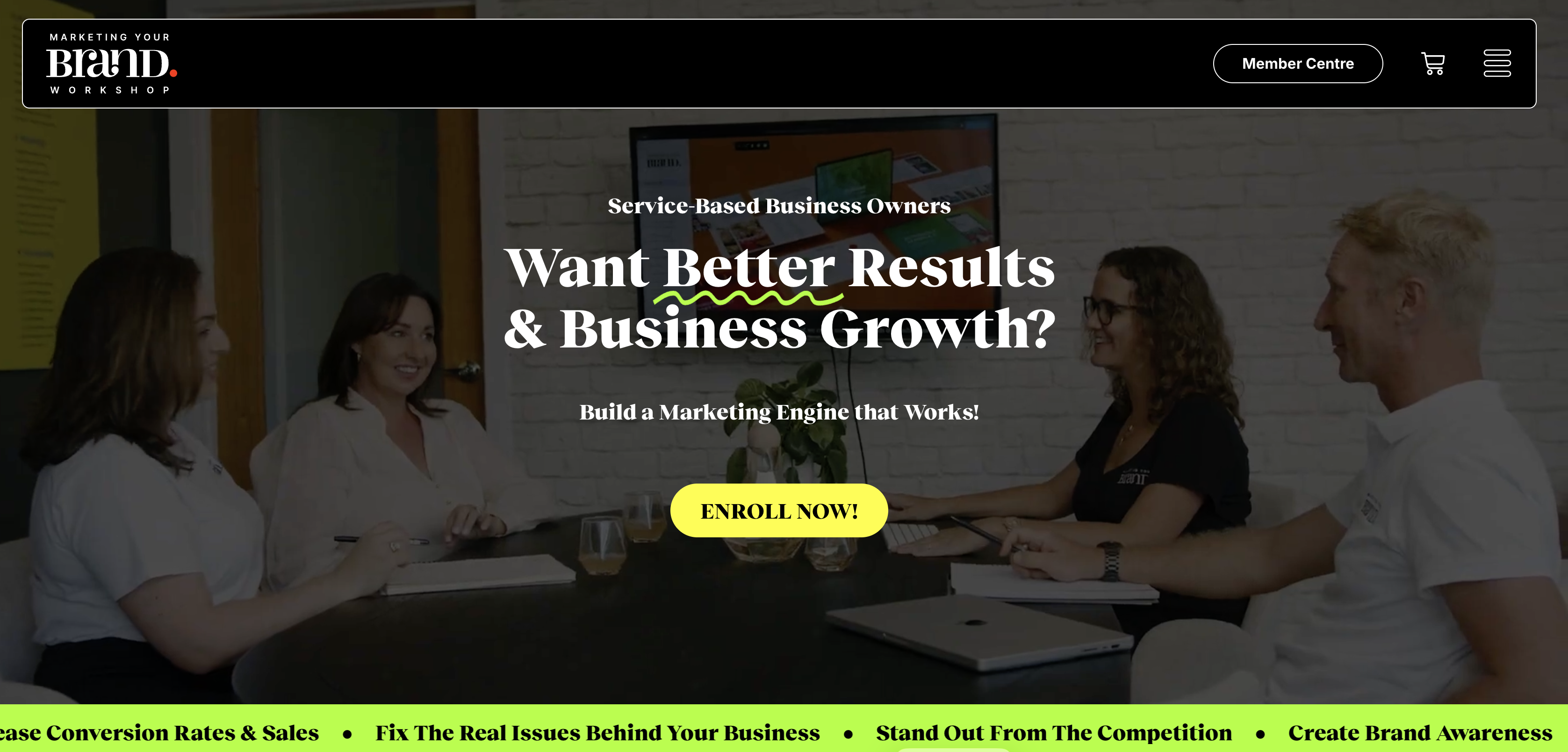
Mybworkshops is built for exactly this situation. The practical workshops walk you through a structured, step-by-step process for integrating AI into your marketing and operations in a way that generates real results. No guesswork, no tech overwhelm. Just a clear framework you can apply to your business immediately. If you want to see what that looks like in practice, start with the free masterclass and take the first step toward a business that works harder for you.
Focus on one repetitive task with a clear success metric and automate it completely before moving on. ROI typically arrives within 3–6 months when you target a single high-friction process rather than multiple pilots at once.
No. Success with AI depends on process clarity and workflow documentation, not coding. No-code platforms like Zapier and Make allow you to build working automations without any technical background.
Start with tasks that are repetitive, rule-based, and take more than three hours per week. Lead follow-up emails, customer service triage, appointment scheduling, and CRM data entry are consistently the highest-return starting points for service-based business owners.
Measure outcome metrics, not activity. Track hours saved, error reduction, and response time improvement rather than how often you use the tool. If your defined success metric is not improving within 30 days, the scope of your automation is likely too broad.
No. AI handles volume and repetition well but requires your strategic direction to produce results that align with your brand and business goals. Use AI to execute tasks within a clear marketing system, not to replace the thinking behind it.