

Referral marketing is one of the most cost-effective client-acquisition channels available to service businesses, and it deserves a proper system rather than an occasional favour asked of happy clients. Start by identifying your promoters, agreeing a simple ask-plus-handoff process, and responding within four hours of any referral landing. One rule sits underneath all of it: never add a referred person to your marketing list without their consent.
TL;DR:
- Referral programs should be targeted at clients with a Net Promoter Score of nine or ten to ensure high-quality leads and increase the likelihood of successful referrals.
- Incentives should be scaled according to the service value and sales cycle, with staged rewards at meaningful milestones to boost referrer engagement.
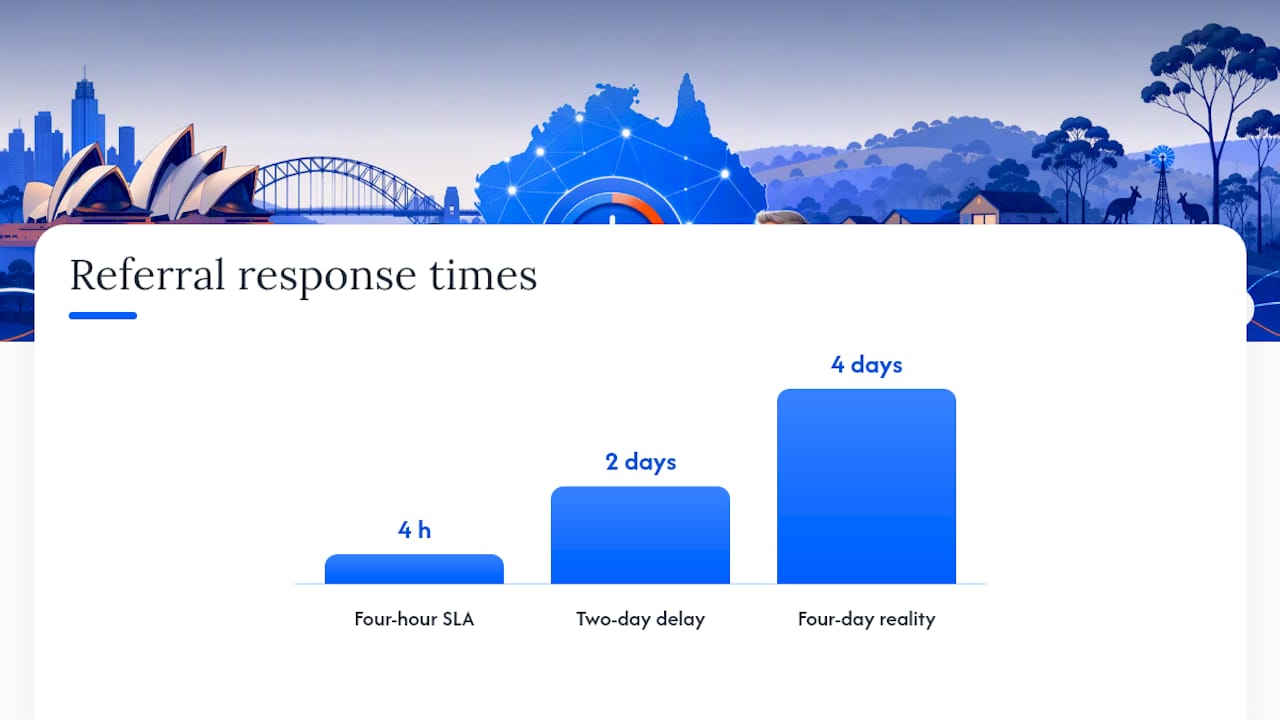
- Response times within four hours of a referral are critical to maintain social capital and prevent losing momentum or trust.
- Legal compliance requires sending a single opt-in invitation to referred contacts and carefully tracking their consent before marketing communications.
- Running a pilot program for six to twelve weeks with top promoters and tracking specific metrics helps ensure the referral system’s effectiveness before scaling.
Referral marketing means turning satisfied clients, partners, and staff into an active source of new business, rather than hoping word-of-mouth happens on its own. For service businesses, this matters more than for retailers because trust is the entire product. Nobody buys accounting, legal, coaching, or trade services on impulse. They buy on recommendation.
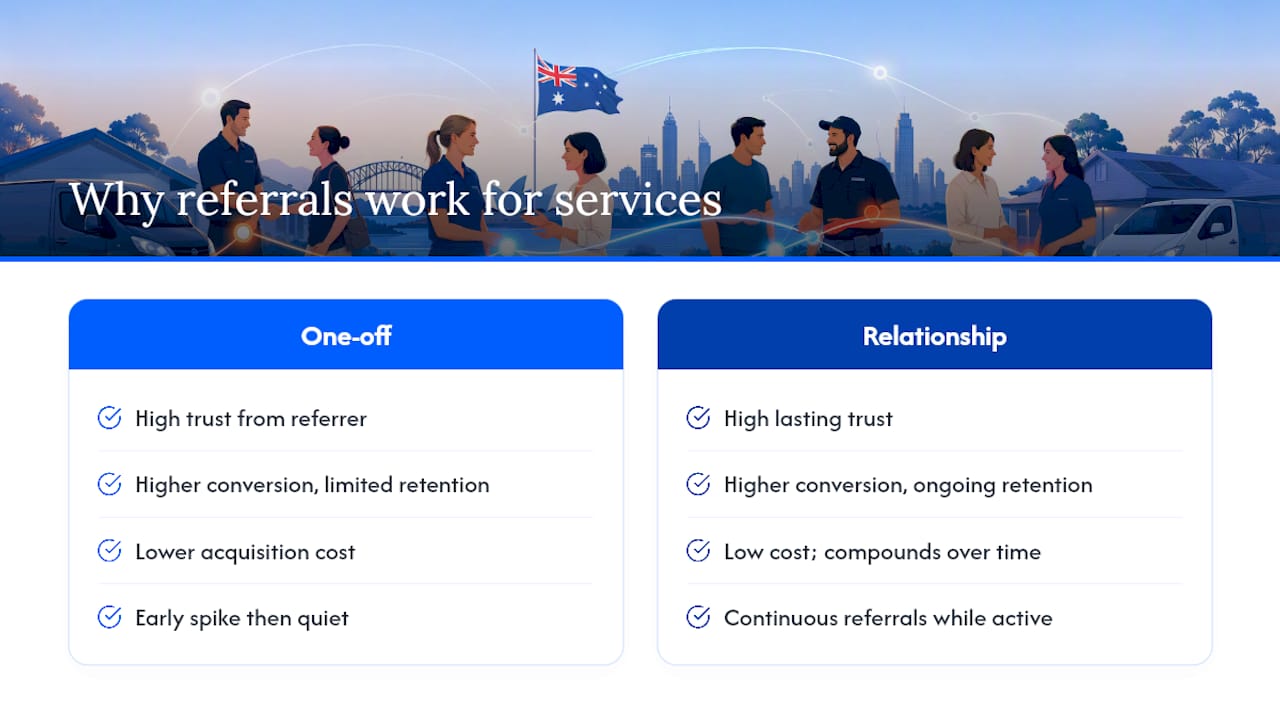
The evidence backs this up. Academic research on referral programmes has found that customers acquired through referrals often convert and retain at higher rates than those acquired through non-referral channels. A referred client already trusts the referrer’s judgement before you say a word, which shortens the sales conversation and reduces the discounting pressure that cold leads bring with them.
Referrals also tend to cost less to win. Structured programmes can cut acquisition costs well below what paid advertising delivers, because the “marketing” is really just a conversation between two people who already trust each other. That efficiency compounds over time as your client base grows and each satisfied client becomes a potential source of two or three more.
The behaviour differs by service type, too. A one-off transactional service (say, a single logo design) tends to generate a referral early and then go quiet, while a relationship-based service (ongoing bookkeeping, physiotherapy, coaching) keeps generating referrals for as long as the relationship lasts.
Not every happy client is a good referral source, and guessing wastes time. The most reliable filter is Net Promoter Score. Clients scoring nine or ten out of ten on “how likely are you to recommend us” are your promoters, and B2B practitioner research recommends targeting referral asks specifically at that group rather than sending a blanket request to everyone on your books.
Beyond NPS, watch for natural trigger moments: a client just hit a milestone with your service, left a glowing review, or renewed early. These moments are when goodwill peaks, and that’s when the ask lands best.
Your advocates generally sort into three tiers, and each responds to a different motivation:
Make the ask personally wherever you can. A short, warm message from the business owner or the person who actually delivered the service beats an automated email every time. Something as simple as “You mentioned [specific result] the other day. Do you know anyone else who’d benefit from the same thing?” works because it’s specific, not generic.
Two-sided incentives, where both the referrer and the new client get something, work better than one-sided rewards because they remove the awkwardness of “selling” a friend on your service. The referrer isn’t just doing you a favour. They’re handing their contact a genuine benefit too.
For service businesses, the reward should scale with the value and length of the sales cycle:
Staged payouts, paid at meaningful milestones like a demo booked or a lead qualified rather than only at final close, tend to increase referrer participation compared with a single payout-at-close model(https://syncgtm.com/blog/how-to-structure-a-referral-program-b2b-sales), because they give the referrer proof the programme is real long before the deal closes.
For high-value relationships, cash isn’t always the best lever. Non-monetary incentives such as public recognition, a donation to a cause the client cares about, or priority access to your services often outperform small cash rewards in professional service contexts, where a cash reward can feel transactional rather than appreciative.
Pro Tip: Match the reward to the relationship, not just the dollar value of the deal. A client who refers you $50,000 worth of work over a year will remember a genuine thank-you gesture longer than a one-off cheque.
Warm referrals cool fast. A friend’s introduction that sits unanswered for two days starts to feel like a dead end, and the referrer notices. Practitioner playbooks for B2B referral programmes advise treating the follow-up SLA as the single highest-failure point in the whole system, and industry reporting on referral requests confirms that response speed is what preserves the referrer’s social capital once they’ve put their name behind you.
Build the workflow so referring takes almost no effort on the referrer’s part:
A set of proven follow-up email templates and cadences can make that four-hour window realistic even on a busy day, because the first message is already written and just needs personalising.
Pro Tip: Tie SLA compliance to a real metric your team checks weekly, not just a policy nobody looks at. What gets measured is what actually happens within four hours, not four days.
You can’t improve a referral programme you’re not measuring, and most service businesses measure almost nothing beyond “did we get any referrals this month.” Practitioner guidance recommends tracking a minimal but specific set of numbers:
For service businesses where a purchase involves more than one decision maker, attribute at the account level rather than crediting a single contact, and set a fixed attribution window, typically 90 days for most sales and up to 180 days for longer enterprise cycles, so credit isn’t lost if the deal takes a few months to close.
A weekly five-minute check of these numbers is enough to catch a stalling programme early, well before a quarterly review would reveal the same problem too late to fix cheaply.
This is the part most business owners get wrong, often without realising it. Under the ACCC’s Spam Act compliance guidance, you cannot add a referred person straight onto your marketing list, no matter how warm the introduction was. You’re permitted to send one invitation to connect, referencing the referral, and nothing more until they opt in themselves.
This single-invitation approach protects both the relationship and the business from a compliance headache later.
You don’t need a big-budget campaign to start. A focused six to twelve-week pilot with your top promoters tells you almost everything you need to know before committing further resources.
Treat the pilot as a genuine test, not a formality. A structured referral programme, run as part of the sales motion rather than a one-off marketing push, is what separates a system that keeps generating clients from a nice idea that fizzles out after the first few months.
Building a referral system properly takes more than a template, and that’s where a structured workshop earns its place. The MYB Workshops programme walks service business owners through designing the referrer tiers, writing the ask scripts, setting up the CRM handoff, and locking in the four-hour SLA discussed above, so nothing gets left as a vague intention.
Participants can leave with assets like templates, tracking sheets, and incentive structures, along with opportunities for mentoring and community feedback to pressure-test the system against a real business. If you already have a client base but no repeatable way of turning happy clients into new business, it may be time to move past DIY guesswork.
You can explore the available workshop topics and current schedule or browse examples of businesses built through the workshops to see how the framework applies to different service industries. For a broader look at how referral systems fit alongside website conversion, lead generation, and organic growth, the full workshop catalogue covers each piece of that wider marketing engine.
Referral marketing is a system for turning satisfied clients, partners, and staff into active sources of new business, using structured incentives, clear asks, and fast follow-up rather than relying on word-of-mouth to happen by chance.
Definitions of the 3-3-3 rule vary across marketing contexts and it isn’t a standard referral marketing concept, so rather than force an unclear fit, focus on the metrics that do matter for referrals: participation rate, referral-to-opportunity rate, and close rate.
There’s no single fixed figure, since reward size should scale with service value and sales cycle length, but staged payouts tied to milestones like a booked consultation or a qualified lead tend to outperform a single payment at final close.
Yes, referral marketing is legal, but the Spam Act restricts what you can do with a referred contact’s details. You can send one invitation to connect based on the referral, but you cannot add them to a marketing list without their consent.