

A packaged service is a named outcome sold at a fixed scope and a fixed price, not a block of hours. The single move to make this week: pick one service you already deliver often, write down exactly what’s included, and attach one price to it. Fixed fee or value-based pricing across three tiers is the practical default for most freelancers and small service businesses.
TL;DR:
- Most packaged services should be based on work delivered at least three times, with clear outputs, reusable assets, and observable demand from clients.
- Setting prices at 1.5 to 2 times your honest delivery hours, with tiered options doubling and tripling that base, ensures profitability and covers scope creep.
- Naming tiers after outcomes, such as “Launch,” “Grow,” and “Scale,” rather than generic labels helps clients choose the right ambition level while maintaining healthy margins.
- Automating onboarding steps and documenting delivery processes keeps operations scalable and preserves margins as volume increases.
- Presenting packages with clear deliverables, prices, timelines, and guarantees reduces client objections and streamlines sales without custom quotes.
To package your services means turning something you currently quote job by job into a defined, repeatable product with a name, a fixed scope and a set price. Buyers stop comparing your hourly rate to a competitor’s and start comparing offers, which usually makes it easier to charge more for the same work. Packaging a service offer converts an open-ended, hourly arrangement into something with a clear promise and defined deliverables, and that shift alone tends to lift what a seller can charge for delivering it, according to Catalyst Outsourcing’s guide to packaging service offers.
This is the core idea behind productised services and productising your service more broadly. Instead of “I’ll build you a website, price depends on scope,” you offer “Website Launch Package: five pages, live in three weeks, $4,500.” Same skill, completely different buying experience.
Not every service you offer is worth packaging. The best candidate is one you’ve delivered enough times to know exactly what it takes, produces a result the client can point to, and doesn’t need to be reinvented for every job.
Run each candidate service through this quick scorecard before committing time to building a package around it:
Score each service against these five points and pick the one with the strongest yes answers as your pilot package. Resist the urge to package your most complex or most impressive service first. The best productised service examples freelancers build tend to be the boring, repeatable ones. Bookkeeping cleanups, logo refreshes, five-page website builds, monthly reporting packs. Nobody gets excited pitching them, but they’re the easiest to scope, price and deliver consistently.
Vague scope is what turns a fixed-price package into an unpaid open-ended job. Before you price anything, write down these details in plain language your client will actually read.
Good in/out language reads like this: “Includes two rounds of revisions on the initial draft. Additional rounds billed at $150 per hour.” Or: “Package covers website design and build. Copywriting, photography and ongoing hosting are not included and can be quoted separately.” That second line alone prevents most scope creep disputes before they start.
Pro Tip: Add one sentence about dependencies to every proposal: “Work begins once we receive your logo files, brand colours and website copy.” That single line shifts responsibility for delays back onto the client, and it’s the cheapest scope-protection clause you’ll ever write.
Five pricing models cover almost every service business: hourly, fixed fee, value-based, retainer, and performance-based. Hourly rewards slow delivery and punishes efficiency, which is exactly why it works against you once a service is packaged. Fixed fee and value-based pricing tend to work better for packaged offers because the buyer knows the number upfront and you’re rewarded for getting faster, not slower, according to Catalyst Outsourcing’s breakdown of pricing models.
Here’s the arithmetic that actually sets a number, rather than guessing one:
A five-hour job at a $60 hourly floor gives you a $300 cost floor. Price the package at $450 to $600, and you’ve built in room for the parts of the job that never show up on a timesheet.
Quick check: if your fixed price divided by actual delivery hours falls below your target hourly rate after the third client, your scope is too generous or your price is too low. Fix one of the two before client four.
Three tiers, usually called Basic, Standard and Premium, is one of the highest-leverage changes you can make to a service business. Freelancers who move from a single price to a tiered structure benefit from the same “good, better, best” psychology retailers have used for decades: anchoring and the compromise effect push most buyers toward the middle option, according to Freelance Nation’s guide to tiered service packaging.
Design each tier by scaling scope, speed and extras, not by cutting corners on quality:
Skip generic labels like “Basic” and “Premium” where you can. Name tiers after the outcome instead, such as “Launch,” “Grow” and “Scale,” so the buyer is choosing an ambition level, not a discount tier. Before you publish prices, check each tier’s margin separately.
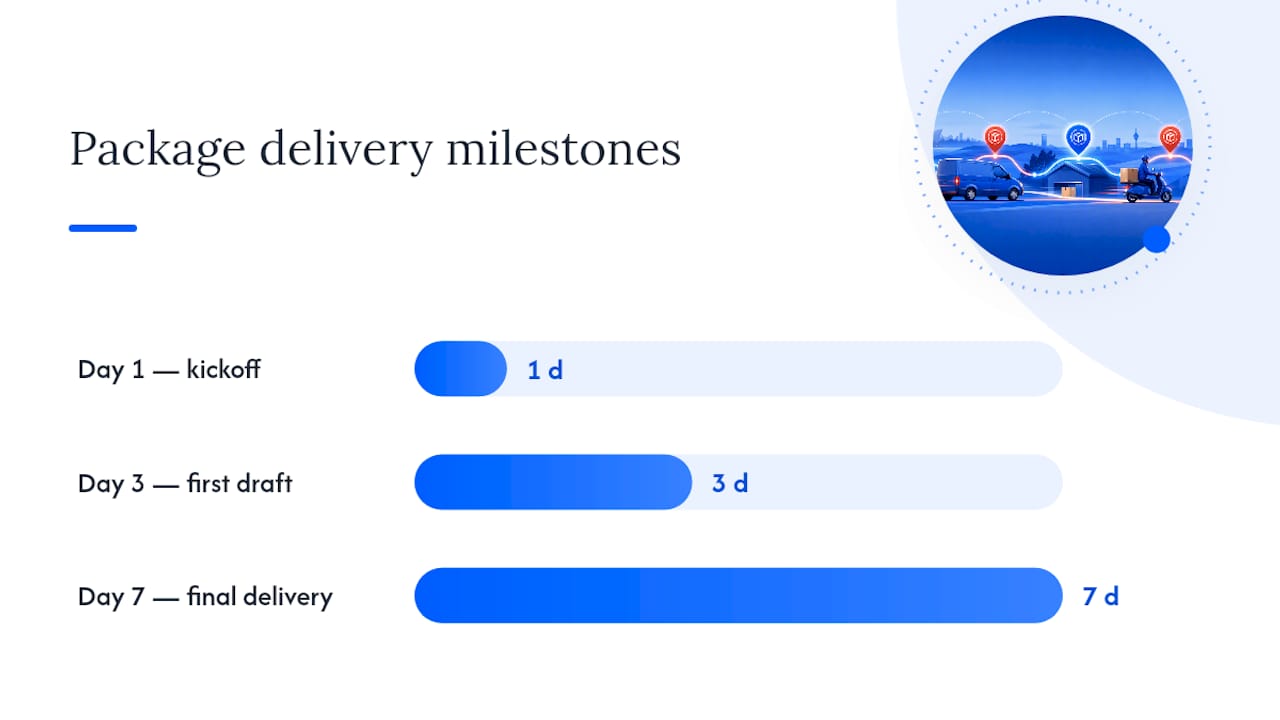
A package only protects your margin if delivery is repeatable, not reinvented every time a new client signs. Document the steps as a simple sequence: what happens Day 1, what happens Day 3, what happens at final delivery, and who on your side owns each step.
Four checkout-to-kickoff automations are worth setting up before you sell your first package: checkout triggers an automatic intake form, intake form triggers project creation in whatever system you use, project creation triggers a kickoff email with the timeline attached, and a calendar reminder flags any step waiting on the client for more than 48 hours. Productising delivery this way, with documented steps and automated handover points, is what keeps admin from eating your margin as volume grows, according to ProductizeHub’s step-by-step guide. Tools built for small business marketing automation, like the ones covered in AmmarAI’s guide to AI for small business, can handle the intake-to-kickoff sequence without you touching it manually.
Pro Tip: Track how many emails it takes to get a client from “paid” to “work started.” If it’s more than two, your onboarding has friction hiding in it that a template or automation could remove.
Your first version of any package is a draft, not a finished product. Sell it to a small number of pilot clients at a discounted rate, roughly 50 to 70% of your intended full price, in exchange for detailed feedback and a testimonial you can use later, a trade that consistently works well according to ProductizeHub’s guide to productising a service.
Look for pilot clients in the places that already trust you:
Message the pilot plainly: name the discount, name the trade (feedback and a testimonial), and set a deadline for the offer. After three to five successful deliveries, raise the price to the level you originally calculated and publish the testimonials you collected. The goal of a pilot isn’t just cheaper clients. It’s real evidence of where your scope was too generous, too vague, or missing a step entirely.
Once a package is validated, the way you present it should let a buyer decide without booking a call first. That means a headline naming the outcome and the audience, not your job title. “Website Launch Package for Service Businesses” beats “Web Design Services” every time.
Beyond the headline, a package page or proposal needs:
For checkout, decide upfront whether buyers pay immediately or go through a short intake form before paying. Immediate payment suits low-risk, well-defined packages under a few hundred dollars. A short intake step before payment fits higher-priced packages where you need to confirm fit before committing. If you want a structured way to lay all this out, proposal writing for service businesses is worth studying before you write your next one.
Buyers hesitate on fixed-price packages because they’re worried about being locked into scope they don’t fully understand yet. A well-worded guarantee or payment structure removes most of that hesitation without exposing you to open-ended liability.
Common options worth using:
A safe guarantee names the specific failure it covers and the specific remedy, never a blanket promise of satisfaction. For payment schedules, a 50% deposit before work starts and 50% on delivery is standard for smaller packages. Larger packages commonly split into three stages: deposit, midpoint, and final payment on delivery.
Working this out alone, from a blank page, is where most freelancers stall. A structured, three-phase program built specifically for service business owners doing exactly this work helps clarify the offer, fix the pricing, and build the page that sells it. Participants leave with a signed-off package, a pricing structure, a working landing page and a documented delivery process, not just notes from a workshop.
Part of the program covers upsell design inside your existing packages, and participants who apply those ideas have reported lifetime value gains of 20 to 40% without adding pressure to the sales conversation. If you want to see what the format actually looks like before committing, this explainer on what a marketing workshop involves walks through the structure.
“That’s more than I expected to pay” is the objection you’ll hear most, and it usually means the client hasn’t yet connected the price to the specific outcome. Restate the deliverable, not the hours behind it: “This package gets your site live in three weeks with five pages, hosting setup and one training call included.” Price objections soften considerably once the client sees exactly what’s inside the number.
“Can we customise it?” comes next, especially from clients used to negotiating scope with freelancers. Offer a narrow, priced add-on rather than reopening the whole package. “We can add an extra page for $350” protects your tier structure far better than “sure, let’s talk about what you need.”
“Why is this fixed if my situation is different?” is worth addressing head-on rather than dodging. Explain that the fixed scope is what lets you deliver reliably and quickly, and that genuinely different situations get a separate, custom quote rather than a bent version of the package. This actually builds trust, because it shows the package isn’t a gimmick, it’s a real, tested process.
Finally, “I need to think about it” often just means the client hasn’t seen social proof yet. A testimonial, a before/after example, or a short case study answers this objection before it’s even raised, which is exactly why gathering pilot client feedback early pays off later.
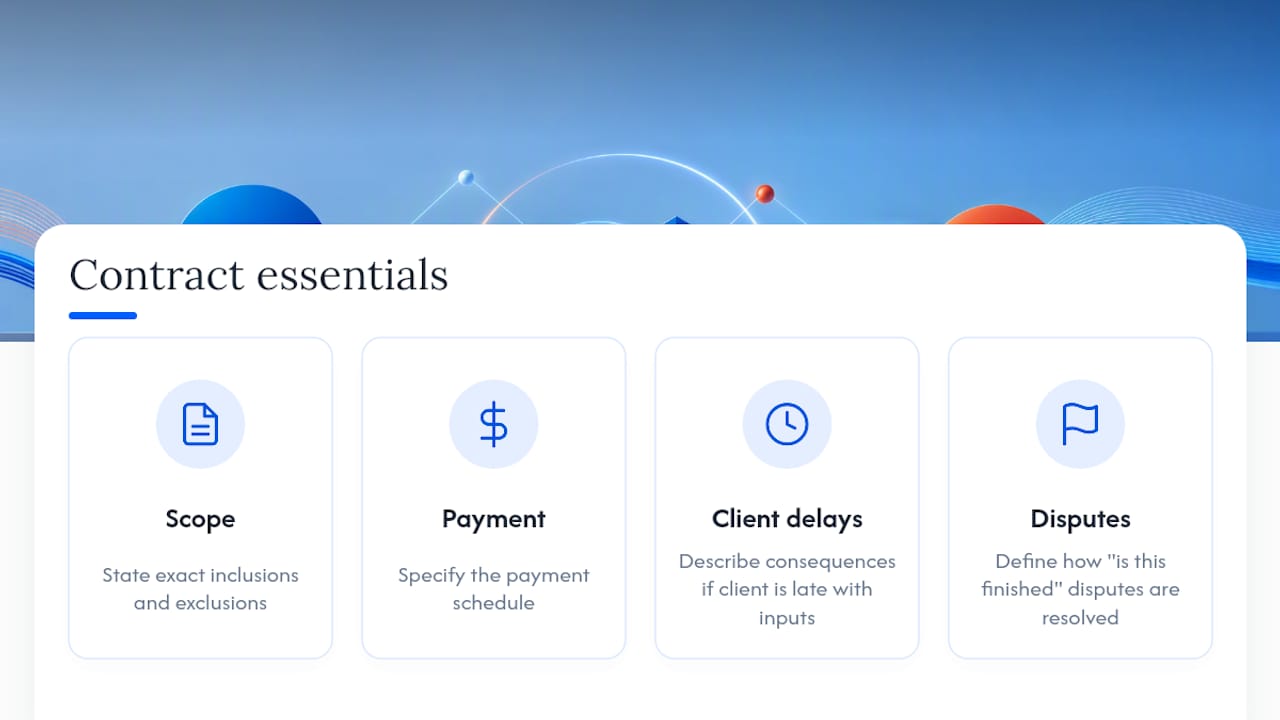
A packaged service still needs a proper agreement behind it, even when the offer feels simple enough to sell from a single web page. At minimum, your contract or terms of service should state the exact scope (what’s included and excluded), the payment schedule, what happens if the client is late providing inputs, and how disputes over “is this finished” get resolved.
Cap your liability explicitly. A line stating that your total liability under the agreement is limited to the fees paid for that specific package protects you from a client trying to claim damages far beyond what they paid you. If your guarantee includes a refund or free revision clause, write the exact trigger and the exact remedy into the contract itself, not just on the landing page, so there’s no gap between what you advertised and what you’re legally bound to honour.
If you collect any personal data through your intake form or checkout, even something as simple as an email address and business name, make sure your data handling follows standard privacy practice. Marketing automations that use retargeting or stored client data should follow recognised consent frameworks such as those summarised by the IAB Transparency and Consent Framework, particularly if you’re running any paid ads tied to your package funnel. None of this needs a formal legal review for a straightforward service package, but it does need a written agreement your client signs before work starts, every time, with no exceptions for “repeat clients we trust.”
Reading a guide gets you the framework. Turning it into a priced package with a working landing page by next month is a different job, and it’s the one most freelancers put off indefinitely because there’s no deadline forcing it. Mybworkshops exists specifically to close that gap, with structured sessions and personal mentorship instead of another guide to bookmark.

The Business Strategy Workshop is the natural starting point if you’re still deciding which service to package and how to position it against what else is in the market. If you’re further along and ready to build the actual offer, pricing and page, the full workshop catalogue lays out each session so you can pick the one that matches where you’re stuck. Real participant outcomes, including how they scoped and priced their own packages, are documented on the examples of businesses built through workshops page. If you’ve been meaning to fix your pricing for months, view the workshops and pick the one session that gets you unstuck this week.
The heuristics in this article draw on three practical guides worth reading in full if you want more detail on any single step. Catalyst Outsourcing’s guide to packaging a service offer covers pricing model trade-offs and the psychology behind tiered pricing. ProductizeHub’s step-by-step productisation guide walks through onboarding automation and pilot client tactics in more depth. Freelance Nation’s guide to basic, standard and premium tiers has additional worked examples of tier spacing and naming.
Most service businesses package around four categories: project-based work with a fixed deliverable, ongoing retainers billed monthly, consulting or advisory time, and hybrid packages that combine a fixed deliverable with an ongoing support component.
Pick one service you deliver often, write down the exact deliverables, timeline and exclusions, calculate your cost floor from honest delivery hours, then price at 1.5 to 2 times that floor across three tiers.
Lead with a landing page that names the outcome and shows the price, then promote it through existing clients, your professional network and niche communities where your ideal buyer already spends time, backed by testimonials from pilot clients.
Yes, but keep them separate. Reserve custom quotes for genuinely different situations outside your package scope, and offer small, priced add-ons instead of bending your standard package to fit every request.
If your fixed price divided by actual delivery hours falls below your target hourly rate after three or four clients, your scope is too generous or the price needs raising before you sell it again.