

Goal Led Marketing Budgets for Australian Service Owners

Australian owner allocating a marketing budget

The stronger rule, backed by Business, is to build your budget from a specific goal, not a flat percentage. The sections below walk you through that method step by step.


TL;DR:

  • A marketing budget should be built from a specific goal, not from industry averages or percentages, to reflect your unique margins, costs, and growth aims.
  • Focus your spend primarily on channels that already generate results, allocating smaller amounts to promising but unproven efforts, and reserve a test budget for new experiments.
  • Track relevant metrics such as online revenue and conversion rates, updating forecasts regularly to ensure your budget aligns with actual performance and avoids overspending.
  • Include marketing expenses from day one and ensure compliance with consent and advertising claim regulations before committing funds.
  • Utilize government templates and guidance to create a goal-driven marketing plan, budget, and measurement framework suited to your business stage and objectives.

Mybworkshops
Build A Marketing Budget That Works
MYB Workshops helps service-based business owners turn marketing goals into actionable strategies, supported by mentorship and practical AI tools.

Explore MYB Workshops

Table of Contents

Common benchmarks and why percentages can mislead

Percentage rules of thumb are a useful sanity check, not a budget. Many B2B service businesses generally spend a lower share of revenue on marketing, while businesses pursuing faster growth or selling to consumers tend to spend more, and overall averages can vary. None of these numbers tells you anything about your goal, your industry or your stage of growth.

That variation is the whole point. Australia has 2,729,648 actively trading businesses as at 30 June 2025, spread across wildly different models, cost structures and margins. A percentage that suits a busy retail shop tells you almost nothing about a solo consultant or a two-year-old trades business.

Before you copy anyone’s average, check it against your own numbers:

  • Your margin matters more than the percentage. A high-margin service business can often afford to spend more than a low-margin retailer selling the same dollar value.
  • Your goal decides the number, not the industry average. A business trying to fill a new location needs a different budget to one simply maintaining existing enquiries.
  • Your cost structure sets the ceiling. Fixed costs, staff wages and stock all compete with marketing for the same cash.

A budget built on your target customer, positioning and goals will always outperform one copied from an industry average, according to business.gov.au’s guidance on marketing plans, which notes there’s no universal percentage that fits every business.

Step-by-step method to set a budget from goals, costs and channels

Skip the guesswork and build the budget in order.

  1. Set one SMART goal with a timeframe. For example, increase sales by 10% in 12 months, a goal used as an example in Business.
  2. List the channels that actually move that goal. For a service business that might mean your website, a lead generation system and a handful of paid channels, each with an estimated cost per activity.
  3. Compile expected income against fixed and variable costs, following Business. Start-ups should confirm at least six months of runway before committing to ongoing spend, and every estimate should be clearly labelled as including or excluding GST.
  4. Convert the annual figure into quarterly and monthly amounts, and set a review date so the budget becomes a rolling forecast rather than a set-and-forget number.

Pro Tip: Write your goal at the top of the budget spreadsheet itself. Every line item should be able to point back to it.
How to split your budget across awareness, acquisition and retention

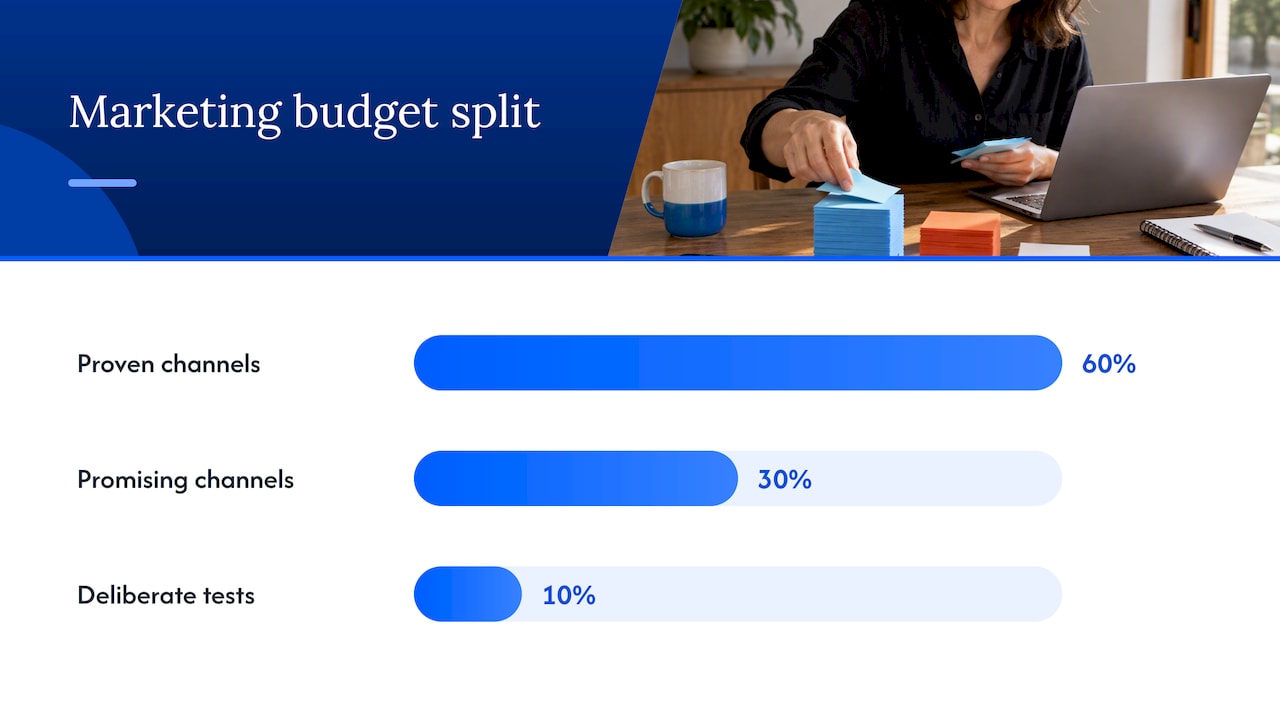
Marketing budget split across three priorities

Once you know the total, the next decision is where it goes. Some owners prefer a 60/30/10 version, weighted slightly more towards testing.

What matters is what each band funds, not the exact numbers:

  • The largest band funds what already works, such as an established referral network, a converting website or a lead generation system with a known cost per enquiry.
  • The middle band funds channels with early signs of promise, like a content series or a paid campaign that’s shown some traction but needs more data.
  • The smallest band funds deliberate tests, such as a new platform or format, with a defined budget cap and a clear success measure before it earns more spend.

A service business might put most of its budget into its website and referrals, a small retail operation might weight more towards local events and signage, and a new start-up might run a larger test band simply because it has no proven channel yet. Move money from the test band into the proven band only once a channel shows a repeatable result, not a lucky week.
Metrics that matter and how to turn actuals into a rolling forecast

Metrics that matter and how to turn actuals into a rolling forecast — overview diagram

Track metrics that match your goal, not activity for its own sake. Business.gov.au’s guidance on measuring digital performance recommends tracking online revenue against sales goals, conversion rates against campaign goals, and using A/B tests to compare one version of an ad or page against another. Likes and follower counts rarely tell you whether the goal is being met.

A short monthly checklist keeps the budget honest:

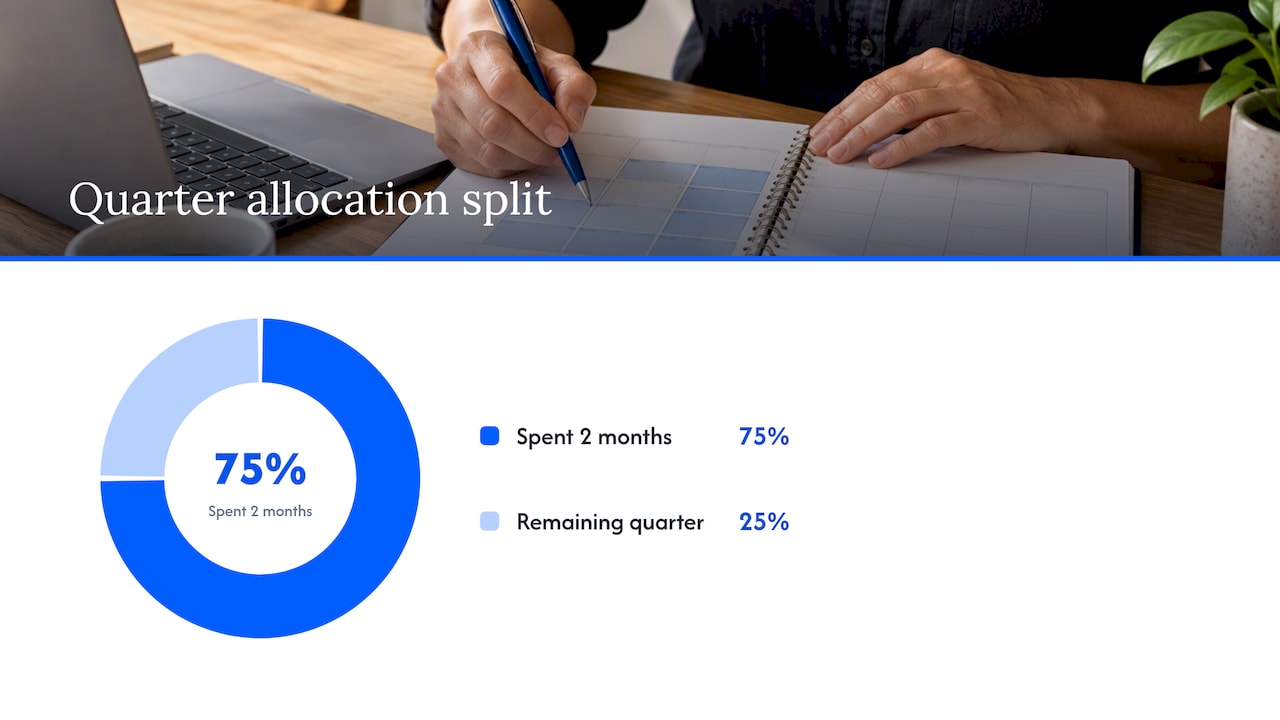
  • Compare actual spend to budget. If you’ve spent three-quarters of a quarter’s allocation in the first two months, that’s a signal to forecast the year-end position now, an approach business.gov.au’s budgeting guidance recommends.
  • Check channel signals, not just totals: which channel is producing enquiries at a sensible cost.
  • Update the forecast, then decide what to pause, continue or scale.

A test budget only earns a bigger allocation once it shows a repeatable result, backed by measurement guidance from business.gov.au, which points owners towards analytics and testing to identify which activity actually drives sales.

Including marketing in start-up costs and the compliance items to budget for

Marketing belongs in your start-up cost plan from day one, not as an afterthought once the doors are open. Business recommends listing marketing alongside other common expenses and checking you can cover at least six months of running costs before committing to ongoing spend.

Two compliance areas deserve a line in the budget, not just a mental note:

  • Consent and unsubscribe requirements. ACMA’s spam guidance requires consent before sending marketing messages, plus a working unsubscribe option honoured within five working days.
  • Evidence for advertising claims. ACCC’s advertising guidance requires claims to be true and provable, with extra care around discounts, cash-back offers and prize promotions before you pay to promote them.

How MYB Workshops helps owners implement a goal-led budget

Turning this method into a working budget takes structure, which is exactly what the Business Strategy Workshop and Lead Generation System Workshop are built around: setting goals, mapping channels and connecting spend to enquiries. Related sessions cover website conversion and clicks that count, so the budget you build actually has somewhere useful to go.

A practical next step if you’d rather not do this alone

If you’d rather work through this with guidance than build it from scratch, the Business Strategy Workshop is built for service business owners who want help turning a goal into a real budget and execution plan. Current prices are on the pricing page. It runs alongside the Lead Generation System Workshop for owners who specifically want their budget tied to a working enquiry system. Current prices are on the pricing page.
Mybworkshops

Owners who prefer to sample the approach first can start with the free masterclass, Build A Better Business, before committing to a paid workshop.

  • Suits owners who have a goal but no clear plan for what to spend or where.
  • Delivers a step-by-step strategy session rather than a generic template.
  • Includes 12 months of access to materials and a supportive community.

Book a place in the Business Strategy Workshop to turn your next goal into an actual budget.

Key government templates and data to download

These are the primary sources behind the method above, worth bookmarking for your own budgeting cycle.

Sources

FAQ

What is a reasonable marketing budget for a small business?

There’s no single figure that fits every business, but many small businesses budget somewhere between 2% and a higher percentage of revenue depending on their goals, margin and growth stage, according to business.gov.au’s marketing plan guidance. Build the figure from a specific goal and your own cost structure rather than copying an industry average.

What is the 70/20/10 rule in marketing?

Some businesses use a 60/30/10 version instead, with the exact split depending on how established their marketing already is.

What is the 3-3-3 rule for marketing?

Definitions of this rule vary across marketing sources, and it isn’t covered by official government guidance. Rather than relying on an unverified rule, use the goal-led method above, setting a SMART goal, mapping channels to it and reviewing spend on a regular cadence.

What is the typical marketing budget for a company?

Typical spend varies enormously by industry, size and goal, which is why business.gov.au recommends building a budget from your own target customer and goals rather than a universal figure. Start-ups should also confirm they can cover at least six months of running costs, following business.gov.au’s marketing guidance for new businesses, before locking in ongoing spend.


Hi There, I'm Peggy

I’m the brains (& the energy) behind MYB Workshops.

For 20+ years, I’ve helped business owners ditch the confusion, clarify their message, and build brands that attract the right clients. No fluff, no overwhelm, just proven strategies that work.

If you want to build a brand that feels right and actually brings in business, you’re in the right place!

Hi There, I'm Peggy!

For more than 20 years, I’ve helped businesses grow with better marketing systems that support long-term plans.

Everything inside MYB Workshops is built from the same strategies, frameworks and practices we use in our agency. These aren’t theories or quick fixes. They’re proven approaches shaped by real-world results and applied across hundreds of businesses.

MYB Workshops was created to make those tools and insights accessible to business owners who want greater clarity and confidence in their business.

I’m glad you’re here in the Blog, explore some of the hot topics our clients ask us about. I hope to see you in the workshops, real soon!

Build Your Business

If your business isn’t attracting and converting the right customers, something needs to change.

In MYB Workshops, you get proven strategies, expert guidance, and a clear plan that actually works. 

Start building a marketing system that works, today!

Stop Losing Sales

Brand confusion costs sales. Learn how to position, market, and sell with confidence inside MYB Workshops.

FREEBIES
FREE Brand Clarity Workshop

Crafting Your Brand Identity 

An on-demand workshop to help you create a brand identity that attracts the right clients, builds trust, and drives real results, without the guesswork.

PLUS Grab your FREE workbook to implement everything instantly!

6 Strategies to Build a Website That Converts

3 seconds. That’s all it takes for a visitor to decide if they’ll stay or leave your website.

Download this FREE guide to learn 6 proven strategies to keep visitors engaged and turn them into paying clients.

FREE Branding Guide

Your brand is more than a logo. It’s the foundation of your entire business.

If you skip this step, you risk wasting time and money on marketing that doesn’t convert.

Download this FREE guide and discover 5 key steps to build a brand that attracts, connects and drives long-term success.

Related Blog Articles