

Facebook ads in Australia generally cost a few dollars per click and a moderate amount per thousand impressions, though these costs vary significantly depending on your industry and audience. Cost per acquisition varies even more, since it depends on your landing page and offer, not just the ad itself. The one rule that matters most: set aside a learning budget to find what works before you commit real money to scaling.
TL;DR:
- Average CPC in Australia varies significantly by industry, with broad consumer offers typically costing less than niche B2B or professional services.
- Campaign success depends more on conversion rates and landing page performance than on low CPC or CPM metrics alone.
- Testing and validation budgets should be planned carefully, with at least $20 to $30 per audience daily, to gather meaningful data within one or two weeks.
- Tracking pixel compliance and proper measurement setup are crucial to accurately gauge ad performance and avoid scaling based on flawed data.
- The actual costs for results depend heavily on objective choices, placement, audience size, and relevance, which can cause substantial variations beyond industry averages.
Before you can judge whether your ad spend is doing its job, you need to know what you’re actually measuring. Three metrics matter most for Australian small business owners running Facebook ads.
Cost per click (CPC) is what you pay each time someone clicks your ad. Cost per thousand impressions (CPM) is what you pay for your ad to be shown 1,000 times, regardless of clicks. Cost per acquisition or lead (CPA/CPL) is what you pay for each sale, booking or enquiry your ad generates. CPC and CPM tell you how competitive your auction is. CPA tells you whether the whole system, ad plus landing page plus follow-up, is actually working.
Published third-party benchmarks for Australia tend to show CPMs sitting in the single to low double figures in AUD, with CPC varying considerably by industry and objective. These figures are useful for a rough sense check, but they are not a substitute for your own numbers. Every Meta auction is shaped by your specific audience, your creative and who else is bidding for the same eyeballs at that moment, so two businesses in the same industry can see genuinely different costs. Check your own Meta Ads Manager account data first: it reflects your actual audience, creative and market conditions, not an industry average.
Here’s a simple worked example using assumptions, not live data. That works out to roughly $1.50 per click. This is why landing page performance often matters more than the ad’s raw cost.
A few things skew these numbers in practice:
A low CPC does not automatically mean a successful campaign. Cost per qualified enquiry or sale, checked after landing-page and follow-up performance, is the number that actually tells you whether the campaign is working, according to OAIC guidance on tracking pixels.
Facebook, now run under Meta, allocates ad space through an auction, not a fixed price list. Every time your ad is eligible to show, it competes against other advertisers targeting the same person, and the winner is decided by a combination of bid, estimated action rate and ad quality, not just who pays the most. This means a well-made ad with strong relevance can beat a higher bid from a competitor with weaker creative.
Several factors shift where you land in that auction:
Pro Tip: Test one placement change or one new audience at a time, so when your cost per result moves, you know exactly what caused it.
Objective choice deserves its own mention. If you tell Meta to optimise for link clicks, it will find you cheap clicks, but not necessarily people who buy. Optimising for the actual outcome you want, whether that’s a purchase, a lead form or a call, usually costs more per click but delivers a better cost per outcome. This is a common trap for business owners new to Facebook ads: chasing a cheap-looking metric while the number that actually matters, cost per sale, quietly climbs.
Budgeting for Facebook ads works best in three stages, and skipping the first one is the most common reason small business campaigns underperform.
As a rough illustration, say you’re testing three audiences and three ad creatives. A daily budget of $20 to $30 per audience gives Meta’s algorithm enough data to start optimising within a week or two, rather than starving each variant of impressions. Spreading $20 across nine combinations at once usually means none of them get enough data to tell you anything useful.
Minimum viable spend matters because Meta’s delivery system needs a reasonable number of actions, typically conversions, to optimise properly. A campaign spending $5 a day targeting a high-value, low-frequency purchase may simply never generate enough data to learn from, no matter how long it runs.
If you want 20 enquiries and expect a $40 cost per lead, budget for roughly $960 to give the test room to breathe rather than cutting it off at exactly $800.
The cost figures in your Ads Manager dashboard are only as reliable as your tracking setup. If your pixel or conversion events are misconfigured, you can end up making scaling decisions based on numbers that don’t reflect what’s actually happening.
Australian privacy rules add another layer business owners need to understand. The OAIC’s guidance on tracking pixels requires organisations using third-party tracking pixels for targeted advertising to comply with Australian Privacy Principle 7, which includes offering a simple way for people to opt out of direct marketing. In June 2026, the Privacy Commissioner found that using tracking pixels on health-related websites to collect sensitive information and retarget visitors requires consent, a reminder that sensitive-data targeting carries real legal risk regardless of business size.
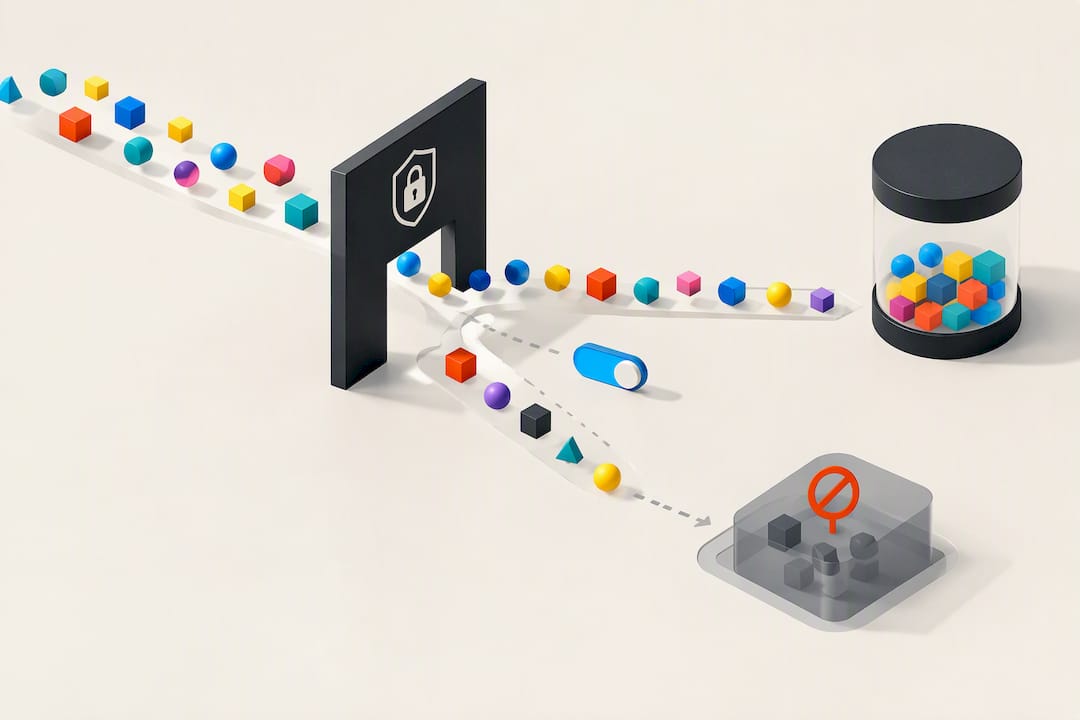
Separately, ACMA’s Statement of Expectations recommends express consent and clear terms and conditions for e-marketing follow-up, whether that’s email, SMS or phone. This matters for cost calculations because your follow-up channel, not just the ad, determines your effective acquisition cost. A cheap click that converts through a well-run email sequence is a better result than an expensive click that gets no follow-up at all.
A practical audit checklist for your account:
| Check | What to look for |
|---|---|
| Pixel firing correctly | Events match actual site actions in Meta’s Events Manager |
| Conversion event mapping | The event you optimise for matches the action that generates revenue |
| Opt-out mechanism | A simple, visible way for visitors to opt out of tracking, per APP 7 |
| Sensitive data handling | No health, political or similarly sensitive data used for retargeting without consent |
Don’t install a pixel and forget about it. Poorly managed or non-compliant measurement can make a campaign look cheaper than it really is, leading you to scale a result that isn’t actually there, according to OAIC guidance.
Reducing Facebook ad costs isn’t about tweaking bids all day. It’s about fixing the parts of the system that determine whether a click turns into a customer.
Pro Tip: Before touching your bid strategy, check whether your landing page converts clicks into enquiries. A cheaper click that doesn’t convert is still a wasted dollar.
Read through some of the most common Meta Ads mistakes burning through Australian budgets for a rundown of the account-level errors that quietly inflate cost per result, many of which trace back to steps 1 and 5 above.
Not every business faces the same auction. A handful of practical ranges help set expectations, though every account should be judged on its own data rather than assumed to match an industry average.
Finance, legal and health-related businesses tend to face higher costs partly because of narrower audiences and partly because of the extra consent and compliance considerations around sensitive data, as flagged in the Privacy Commissioner’s June 2026 finding. To translate any of these ranges into your own expected CPA, use the same conservative maths from earlier: take a realistic CPC for your category, apply a cautious estimate of your landing page’s conversion rate, and you’ll get a defensible starting figure rather than a guess.
Knowing your CPC and CPM is only useful if the rest of your business is set up to convert that traffic into paying clients. That’s the gap MYB Workshops is built to close for service-based business owners.
The #9 Drive Traffic & Get Clicks That Count – Ads That Convert Workshop walks you through setting up campaigns that align with your actual offer, not just chasing cheap clicks. The #7 Lead Generation System Workshop covers building the funnel and follow-up system that determines whether a click becomes a client, which matters more than shaving a few cents off your CPC. And if your offer or messaging needs sharpening before you spend another dollar on ads, the #1 Business Strategy Workshop helps you get that foundation right first.
What you get across these workshops:
Start with the Business Strategy Workshop to get your foundation sorted before you scale your ad spend.
For the primary guidance behind this article, see the OAIC’s tracking pixel guidance and ACMA’s consent expectations for direct marketing. ACMA’s platform enforcement reporting covers ad enforcement trends. Your Meta Ads Manager account remains the primary source for your own benchmarking.
A $10 daily budget can work for very early, broad awareness testing, but it’s often too low for Meta’s system to gather enough conversion data to optimise properly. For most Australian small businesses, a daily budget closer to $20 to $30 per audience during the testing phase gives more reliable signals.
Facebook ads can be worth it when your landing page and follow-up system are ready to convert the traffic you’re paying for. The real measure of value isn’t the click cost itself but the cost per qualified enquiry or sale once your full funnel is accounted for.
There’s no fixed price for a 30 second video ad. Cost still depends on the same auction factors as any other format, including audience, placement and objective, so the practical approach is checking your own account’s video ad performance rather than assuming a set rate.
A smaller budget can support a genuine testing phase for most small businesses, particularly when split across a small number of audiences and creatives rather than spread too thin. Whether it’s enough to reach validation or scale depends on your industry’s typical cost per result and how quickly your landing page converts.