

Content is the most reliable lead generation tool a service business owner has. The role of content in attracting leads is to act as a digital magnet, drawing in qualified prospects by demonstrating expertise and building trust long before any sales conversation begins. Australian service businesses that prioritise blogging see 126% more lead growth than those that publish inconsistently. That single figure reframes content from a “nice to have” into a core business asset. The industry term for this approach is Authority Marketing, and it is the framework that separates businesses that chase leads from those that attract them.
Authority Marketing is the practice of using content to demonstrate expertise so thoroughly that prospects come to you pre-sold. Instead of pushing a sales message, you answer the exact questions your ideal clients are already searching for. The result is a pipeline of warmer, better-qualified prospects who already trust your knowledge before they pick up the phone.

Authority Marketing attracts pre-qualified leads who are easier to convert and more likely to become long-term clients. That matters enormously for service businesses, where a single difficult client can consume weeks of your time. Filtering happens automatically when your content is specific and honest about what you do and who you serve.
The content types that build authority most effectively include:
Each of these formats does something a brochure cannot. It gives a prospect enough information to decide whether you are the right fit, before they ever contact you. That self-selection process is what improves conversion rates and reduces time wasted on leads who were never going to buy.
Pro Tip: Write one piece of content each month that directly answers the most common objection you hear from prospects. Over a year, you will have built a library that handles objections before the sales conversation even starts.
Evergreen content compounds this effect over time. A well-written guide published today can generate leads for 3.5 years after publication, working around the clock without any ongoing cost. Unlike paid advertising, it does not stop the moment your budget runs out.
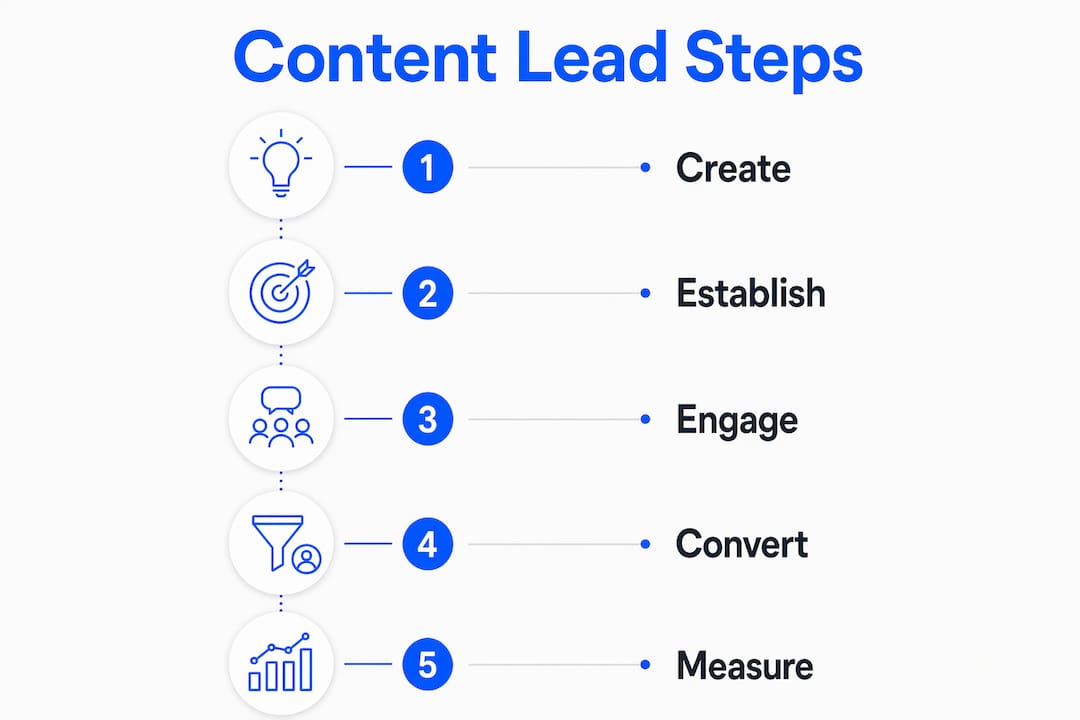
Choosing the right content format is not about following trends. It is about matching the format to where your prospect is in their decision-making process. A business owner who has just realised they need help with their finances needs different content than one who is comparing two specific service providers.
The buyer’s journey has three stages: awareness, consideration, and decision. Each stage needs a different type of content.
Publishing content across all three stages means you are present at every point in the decision process, not just at the end when a prospect is ready to buy.
Consistent blogging is the highest-return content activity for Australian service businesses. Businesses that publish 16 or more blog posts monthly generate 4.5 times more leads than infrequent publishers. That frequency is not realistic for most small businesses, but even two to four quality posts per month builds meaningful momentum over 12 months. The role of SEO in lead generation amplifies every piece of content you publish, helping it reach people who are actively searching for what you offer.
Gated content, such as a downloadable template, checklist, or calculator, sits behind a form that captures a prospect’s email address. This is a proven lead capture method, but it carries a risk. Over-gating content kills organic reach by blocking search engines and first-time visitors from accessing your best material. The better approach is to keep blog content open and freely accessible, then gate only your highest-value assets. A free guide to your service process, a pricing calculator, or a checklist your clients use regularly are all strong candidates for gating.
| Content type | Gate it? | Primary purpose |
|---|---|---|
| Blog posts | No | SEO and awareness |
| How-to guides | No | Trust and authority |
| Templates and calculators | Yes | Lead capture |
| Case studies | No | Consideration and trust |
| Detailed pricing breakdowns | No | Qualify prospects |
Pro Tip: Add a simple content upgrade to your most-read blog post. Offer a one-page PDF summary or a related checklist in exchange for an email address. This turns your best-performing organic content into a lead capture asset without disrupting the reading experience.
Most business owners underestimate how much their content contributes to sales. The reason is simple: they rely on last-click attribution, which credits only the final touchpoint before a conversion. A prospect might read three blog posts, download a guide, and then book a call after clicking a social media ad. Last-click attribution gives all the credit to the ad and none to the content.
Assisted conversions reveal the true value of content in the sales pipeline. When you track how many clients engaged with content before converting, the picture changes significantly. Many clients touch multiple content pieces before they are ready to buy.
Setting realistic timelines matters as much as choosing the right metrics. Australian SMBs typically see initial organic traffic benefits within 3–6 months of starting content marketing. Measurable revenue impact usually follows in the 6–12 month window. Businesses that commit to one channel for a full 12 months build what researchers call a “content moat,” a body of work that is difficult for competitors to replicate quickly.
Understanding why more leads alone won’t fix a stagnant business is equally important. Content that attracts the wrong prospects wastes your time just as much as no content at all. Measuring lead quality, not just lead volume, keeps your content strategy pointed in the right direction.
The most damaging mistake is quitting too early. Most SMBs abandon content marketing before the 12-month mark, which is precisely when compounding returns begin to show. Treating content as a campaign with a start and end date produces campaign results. Treating it as digital infrastructure produces compounding returns over years.
Other common pitfalls include:
Pro Tip: Set a quarterly calendar reminder to audit your five most-visited pages. Check that the information is current, the calls-to-action are working, and the content still reflects how you work. A 30-minute refresh can extend a post’s useful life by another 12 months.
Repurposing existing content is one of the most underused practices in small business marketing. A detailed blog post can become a short video script, a social media carousel, an email newsletter, and a downloadable guide. The research and thinking you have already done gets more mileage without starting from scratch.
Content marketing works because it builds authority, attracts qualified prospects, and creates compounding digital assets that generate leads long after publication.
| Point | Details |
|---|---|
| Authority Marketing drives quality | Content that answers specific client questions attracts pre-qualified leads who are easier to convert. |
| Consistency beats volume | A 12-month content cadence builds a content moat and delivers measurable revenue impact. |
| Gate selectively | Keep blog content open for SEO; gate only high-value assets like templates or calculators. |
| Measure beyond last click | Track assisted conversions and CRM data to see content’s true contribution to your pipeline. |
| Avoid early abandonment | Most businesses quit before compounding returns begin; commit to at least 12 months. |
Building a content strategy that consistently attracts leads takes more than good writing. It requires a clear business direction, a strong brand foundation, and a marketing system that works together. Mybworkshops offers expert-led business and marketing workshops designed specifically for service-based business owners who want to move from guesswork to a repeatable system.
The workshops cover content strategy, brand positioning, website performance, and lead generation in a structured, practical format. Real client results show increased conversions and reduced wasted ad spend when business owners apply the frameworks taught across the programme. If you are ready to build a marketing engine that attracts the right clients consistently, explore the Mybworkshops programme and find the right starting point for your business.
Content attracts leads by demonstrating expertise and answering the questions prospects are already searching for, building trust before any sales contact occurs. This approach, known as Authority Marketing, draws in pre-qualified prospects who are more likely to convert.
Australian SMBs typically see initial organic traffic benefits within 3–6 months and measurable revenue impact within 6–12 months of consistent publishing. Businesses that commit to a full 12-month cadence see the strongest compounding returns.
Blog posts, case studies, detailed how-to guides, and transparent pricing or process pages are the most effective formats for service businesses. These formats build authority, answer client questions, and filter out low-quality prospects before they reach you.
Gate only your highest-value assets, such as templates, calculators, or detailed checklists. Keep blog posts and guides open to maximise SEO reach and trust-building, which feeds a steadier flow of leads over time.
Track assisted conversions in Google Analytics 4, ask new clients what they read before contacting you, and log content mentions in your CRM. Last-click attribution alone underestimates content’s true contribution to your sales pipeline.