

For Australian service businesses, the three tool categories that deliver the fastest, measurable marketing gains are content generation (ChatGPT), automation and workflow (Zapier or ActiveCampaign), and measurement (Google Analytics 4). The single action that moves the needle fastest: set up an automated enquiry follow-up sequence before you touch anything else.
Quick snapshot:
One important note up front: every AI output you publish is your legal responsibility under Australian Consumer Law. Human review is not optional, and business-tier accounts are required whenever client data is involved.
AI multiplies the impact of a clear strategy and a consistent customer journey. It does not replace either. That distinction matters more for service businesses than for product sellers, because your reputation is built on trust and personal delivery.
Australian small businesses are already using AI for social media content, product copy, and operational tasks at a growing rate. The RMIT Online coverage of AI marketing confirms high adoption and plans to increase investment, while also flagging real risks: privacy exposure, hallucinations, and brand-tone drift. Separately, automated nurturing and predictive lead scoring have been shown to raise conversion rates and shorten sales cycles for Australian service businesses.
What AI cannot do: verify its own facts, replicate your lived expertise, or carry your legal responsibility. The ACCC is explicit that misleading or deceptive conduct applies equally to AI-generated content.
Non-negotiable human controls:
Five categories cover the core marketing needs of a service business. Here is a practical breakdown, with Australia-available examples for each.

| Category | Examples | Primary risk |
|---|---|---|
| Content generation | ChatGPT (OpenAI), Google Gemini | Hallucinations, brand-tone drift |
| Images and video | Canva (generative features), Adobe Firefly | Copyright ambiguity |
| Automation/workflow | Zapier, Make | Over-automation, data leaks |
| Email and CRM | ActiveCampaign, Mailchimp | Data handling, list hygiene |
| Measurement | Google Analytics 4 (GA4) | Attribution gaps |
Choosing your first two tools depends on your immediate goal:
Canva’s generative image tools are built into the platform most Australian small businesses already use, making them the lowest-friction starting point for visual content. For service descriptions specifically, Mybworkshops runs a hands-on AI writing workshop that walks you through producing polished outputs with human guidance.
Free AI tools are a sensible starting point, but they often lack the integrations and data protections needed to convert leads consistently at scale. Plan to upgrade to a business-tier subscription once you are generating regular enquiries.
A realistic DIY plan runs across roughly six to eight weeks from first setup to first measurable result.
Audit and prioritise (Week 1, 2–3 hours). List your three biggest marketing bottlenecks: slow lead response, inconsistent content, or no visibility into what converts. Pick the one that costs you the most bookings. That is where you start.
Choose and configure two tools (Week 1–2, 3–5 hours). Select one content tool and one automation or CRM tool. Set up business-tier accounts. Read the data handling policy before you connect any client data.
Build one small automation (Week 2–3, 2–4 hours). Create a single automated email sequence: new enquiry triggers a personalised acknowledgement within five minutes, followed by a value-add email 24 hours later. This alone typically improves response-to-booking rates. For practical use-case examples, the AI use cases guide covers automated enquiries and lead follow-ups in plain language.
Build a human review step (Week 3, 1 hour). Every AI-generated piece that goes to a client or is published externally must pass a three-point check: factually accurate, on-brand tone, no misleading claims. Document this as a one-line rule in your workflow.
Measure and iterate (Week 4–8, 30 minutes per week). Track enquiry-to-booking conversion, lead response time, and cost per converted lead. Adjust one variable at a time.
Pro Tip: The real cost of AI marketing is not the subscription fee. It is the time spent on setup, strategy, and data quality. A clean contact list and a clear offer will outperform any tool configured around vague goals.
| Step | Estimated time | Typical cost |
|---|---|---|
| Audit and prioritise | 2–3 hours | Free |
| Tool setup (2 tools) | 3–5 hours | — |
| First automation | 2–4 hours | Included in subscription |
| Review process | 1 hour | Free |
| Ongoing measurement | 30 min/week | Free (GA4) |
Australian Consumer Law applies to AI outputs exactly as it applies to human-generated content. You are responsible for every claim your business publishes, regardless of which tool produced the draft.
Practical AI governance for Australian SMEs does not require a legal team. A defensible baseline includes three things: an AI tool register, a named responsible person, and a one-page AI use policy.
Compliance checklist:
Cyber.gov.au guidance for small businesses recommends reviewing AI vendor data handling policies before connecting any business data, and establishing a clear internal rule about what information cannot be uploaded to AI platforms.
Customer-facing tools such as chatbots carry higher risk than internal drafting tools and require more rigorous testing before deployment.
Focus on four conversion-led indicators, not vanity metrics like impressions or follower counts.
| Metric | How to track | Data source | Realistic early target |
|---|---|---|---|
| Enquiry-to-booking rate | Bookings ÷ total enquiries | CRM or booking system | Improve over 4–6 weeks |
| Lead response time | Time from enquiry to first reply | CRM or email platform | Under 5 minutes (automated) |
| Cost per converted lead | Ad spend ÷ bookings | GA4 + CRM | Reduce over 4–8 weeks |
| Average revenue per booking | Total revenue ÷ bookings | Accounting or CRM | Baseline first, then optimise |
Connect GA4 sessions to your CRM lead records so you can see which traffic sources produce bookings, not just visits. This is the step most small businesses skip, and it is where attribution gaps appear.
Run a 4–6 week validation test before drawing conclusions. Change one variable per test period. Common attribution pitfalls include counting enquiries that were already warm leads, and crediting the last touchpoint rather than the sequence that built trust. For a deeper look at marketing KPIs and measurement frameworks, that resource covers how to structure campaign measurement across channels.
The right workshop leaves you with a working system, not a slide deck. Focus your evaluation on deliverables, skill transfer, and what happens after the session ends.
Selection criteria:
Red flags:
Questions to ask before booking:
The DIY marketing tools guide from Mybworkshops provides a useful framework for combining strategy with tools before you commit to a workshop.
Knowing which tools to use and actually building a working marketing system are two different things. Mybworkshops closes that gap with a structured, three-phase approach: Discover (clarify your strategy and customer journey), Implement (configure tools and set up your first automation), and Embed (measure results and refine).
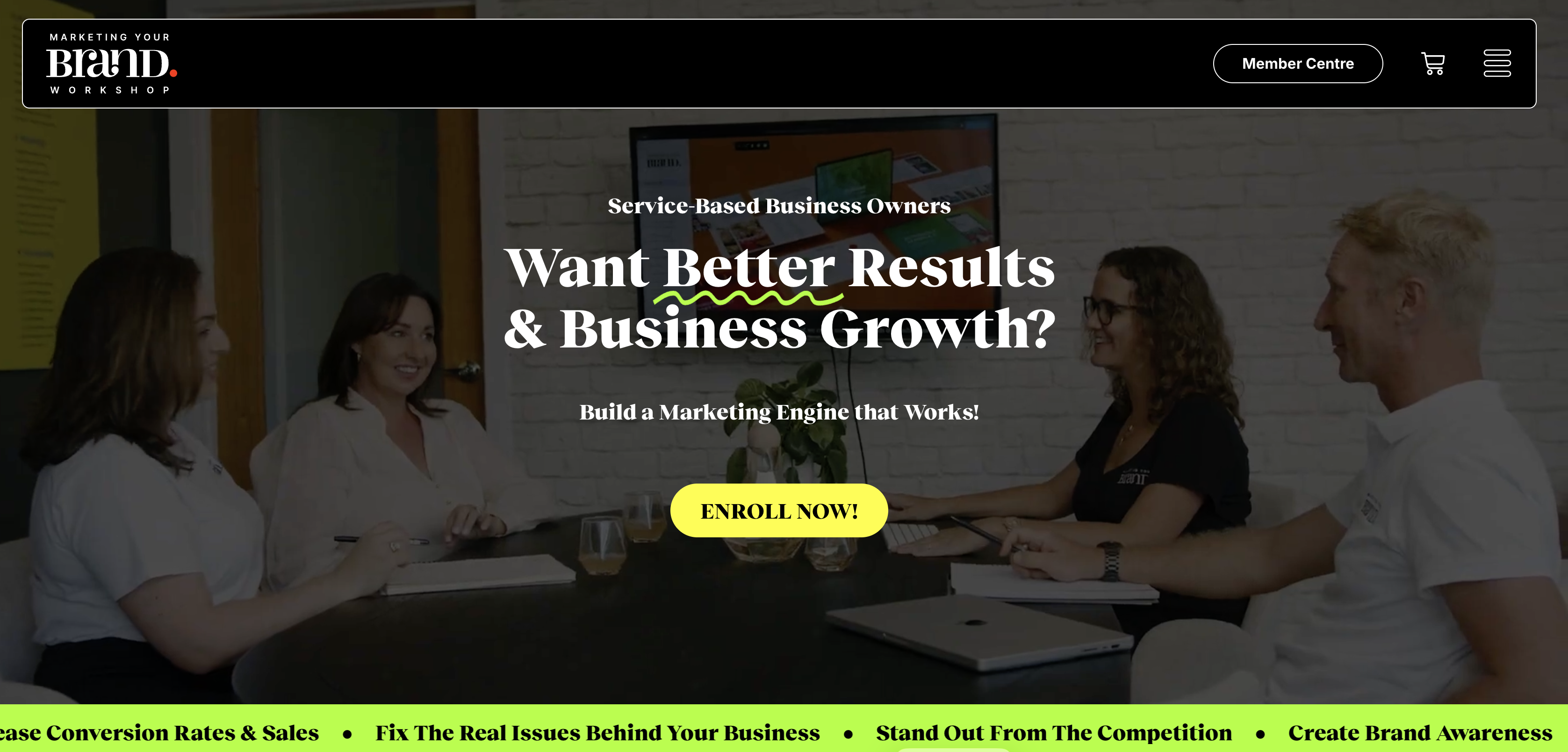
Participants leave with configured automations, a tested email sequence, and a measurement dashboard connected to GA4. The Build a Better Business workshop is the flagship programme for service business owners who want to work through the full system with mentorship. If you are focused on content, the AI writing workshop produces polished service descriptions in a single session. Client outcomes include improved traffic and conversion rates tied directly to workshop deliverables.
Bring your goals, your top one or two service offers, and any existing data (enquiry volumes, current conversion rate) to get the most from the session. Browse the full workshop range to find the session that fits where you are right now.
AI tools work best as an amplifier of clear strategy and clean data. The businesses that see real results pick two tool categories, deploy one automation, and measure conversion consistently for at least four to six weeks.
| Point | Details |
|---|---|
| Start with automation | Set up an automated enquiry follow-up sequence before any other AI tool. |
| Use business-tier accounts | Consumer-grade tools put client data at risk under the Privacy Act. |
| Human review is mandatory | Australian Consumer Law holds you responsible for every AI-generated output you publish. |
| Measure conversion, not vanity | Track enquiry-to-booking rate and lead response time for 4–6 weeks before drawing conclusions. |
| Mybworkshops three-phase support | The Build a Better Business workshop pairs strategy, tool setup, and measurement in one structured programme. |
Start with ChatGPT for content drafts and ActiveCampaign or Mailchimp for automated follow-up sequences. Add Google Analytics 4 to measure which actions convert to bookings.
Yes, but the ACCC makes clear that misleading or deceptive conduct rules apply to AI-generated content exactly as they do to human-written content. You remain legally responsible for every claim you publish.
A basic automated follow-up sequence can improve lead response time immediately. Meaningful conversion data typically requires a 4–6 week test period with consistent measurement in GA4 and your CRM.
Free consumer-grade tools often process data on external servers and may use inputs to train future models. For any work involving client information, use a business-tier or enterprise account with a clear data processing agreement.
Prioritise workshops that include hands-on tool configuration, demonstrable client outcomes, and post-session follow-up support. Mybworkshops’ three-phase programme covers strategy, setup, and measurement in one structured experience.