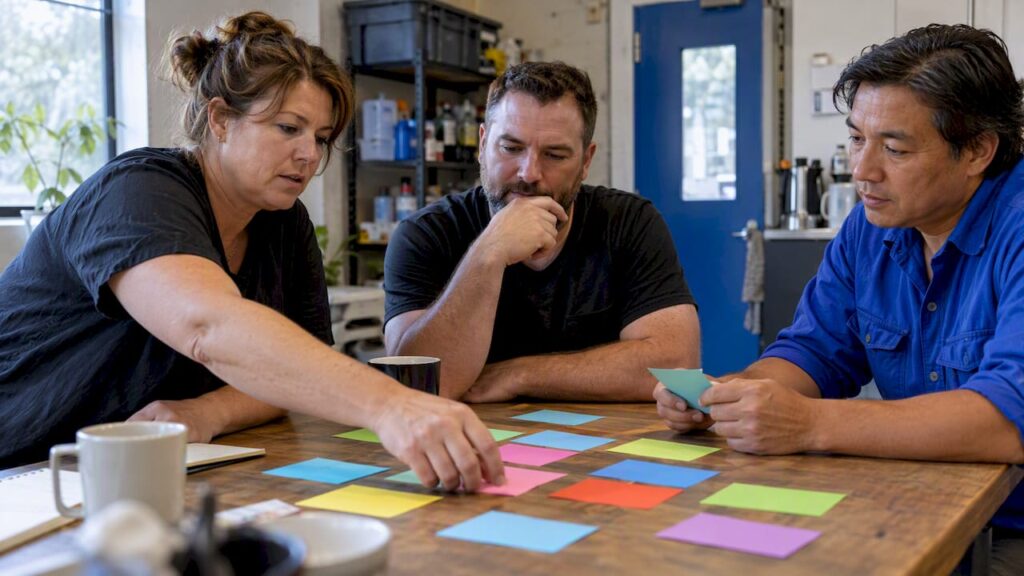

DIY marketing tools for small businesses: 2026 guide

Mature woman using tablet for marketing at home

DIY marketing tools for small businesses are software solutions that let owners manage brand visibility, lead generation, and customer engagement independently and cost-effectively. The problem is not a shortage of tools. It is picking the right ones and connecting them into a system that compounds results over time. Effective DIY marketing depends on integration, not volume. Australian small businesses typically allocate 5–12% of revenue to marketing, which means every dollar needs to work as part of a connected engine, not a scattered collection of tactics.

1. Which DIY marketing tools should small businesses prioritise?

The most effective self-service marketing platforms fall into eight clear categories. Each one covers a critical function in your marketing system.

  • Website builders. Your website is your most important marketing asset. Choose a platform that loads in under 2.5 seconds on mobile. Fast mobile loading correlates with around 20% lower bounce rates for Australian SMBs. That difference directly affects how many visitors stay and convert.
  • Email marketing platforms. Email delivers an average ROI of $36 for every $1 spent in Australian SMB markets. No other channel comes close for long-term growth.
  • Social media scheduling tools. Consistency beats frequency. A scheduling tool lets you plan content in batches and publish at peak times without being glued to your phone.
  • CRM and lead capture tools. A customer relationship management (CRM) system tracks every enquiry and follow-up. Leads go cold fast when follow-up is slow, so automated reminders and sequences are non-negotiable.
  • SEO and local search tools. Google Business Profile is the most powerful free tool for local service businesses. It requires weekly updates to maintain visibility in local search results.
  • Paid advertising management tools. Budget tracking and ad management platforms let you test small daily spends before scaling. Starting with $4–$8 per day is a practical way to learn what works without wasting money.
  • Analytics and measurement tools. You cannot improve what you do not measure. Website analytics, conversion tracking, and campaign reporting tell you which activities drive real results.
  • AI-powered content and automation tools. AI tools handle repetitive tasks like drafting email sequences, writing social captions, and answering common customer questions. They free up your time for higher-value work. Practical AI applications for small business owners are broader than most people realise.

2. What features make a DIY marketing tool effective?

The right tool is not always the most popular one. These are the features that actually matter for small business owners.

  1. Integration with your other tools. A website that does not connect to your email platform or CRM creates manual work and data gaps. Choose tools that talk to each other from day one.
  2. Ease of use without technical skills. If a tool requires a developer to set up or maintain, it is not truly DIY. The best affordable marketing solutions have clear interfaces and plain-language support documentation.
  3. Free tiers and pay-as-you-grow pricing. Most quality platforms offer a free entry tier. Start there, test the tool, and upgrade only when you have outgrown the limits.
  4. Australian compliance and data privacy. Tools that store data on Australian servers and comply with the Australian Privacy Act reduce your legal risk. This matters more than most small business owners realise.
  5. Mobile optimisation. Your tools need to work on a phone, not just a desktop. This applies to your website, your email templates, and your analytics dashboards.
  6. Automation options. The best marketing tools for service businesses automate follow-up sequences, appointment reminders, and lead nurturing. Automation is what separates a marketing system from a marketing task list.
  7. Clear measurement and reporting. Every tool should show you what is working. If a platform cannot tell you your open rate, click rate, or conversion rate, it is not giving you the information you need to grow.

Pro Tip: Before committing to any paid tool, map out how it connects to your website, email list, and CRM. A tool that sits in isolation will cost you time, not save it.

3. How to implement DIY marketing tools effectively

Hands working on CRM integration checklist

Having the right tools is only half the job. How you use them determines whether your marketing builds momentum or stalls. Successful DIY marketing focuses on 2–3 marketing lanes done well, rather than spreading effort across all six channels at once. That focus is what separates businesses that grow from those that stay stuck.

Here is a practical implementation framework:

  • Start with a clear marketing plan. Tools without a plan produce noise, not results. Define your ideal client, your core message, and your primary goal before you open a single platform. Mybworkshops builds this foundation into its three-phase programme so you are never just guessing.
  • Build your foundational assets first. A fast, mobile-ready website and a complete Google Business Profile are your two most important starting points. Everything else connects to them.
  • Set up automated lead capture and nurturing. Use a lead magnet, a simple opt-in form, and an automated email welcome sequence. This system works while you sleep. A lead generation system does not need to be complex to be effective.
  • Choose your 2–3 primary marketing lanes. For most service businesses, this means local SEO, email marketing, and one social media channel. Master those before adding more.
  • Use AI tools for repetitive content tasks. Drafting, scheduling, and responding to common enquiries are all tasks AI handles well. This frees you to focus on relationships and strategy.
  • Measure and adjust monthly. Set a monthly review date. Check your website traffic, email open rates, and lead volume. Adjust what is not working and double down on what is.

Pro Tip: The Australian Government’s Digital Solutions programme has delivered over 33,000 hours of coaching to more than 15,500 small businesses, often at no cost. If you are just starting out, this is a practical first step before investing in paid tools.

The right marketing toolkit for a solopreneur looks different from one built for a team of ten. These categories cover the core functions every service business needs, regardless of size.

Category Core function What to look for
Website and landing page builders Create and host your primary web presence Mobile speed, SEO settings, easy editing
Email marketing platforms Build and nurture your subscriber list Automation, segmentation, deliverability
Social media scheduling tools Plan and publish content consistently Multi-platform support, analytics
Local SEO and Google Business Profile tools Improve visibility in local search Review management, post scheduling
CRM systems Track leads and manage follow-up Pipeline view, automated reminders
Ad management tools Run and track paid campaigns Budget controls, conversion tracking
Analytics platforms Measure website and campaign performance Real-time data, goal tracking
AI content tools Draft copy, captions, and email sequences Tone control, editing interface

A few practical notes on this list. Email marketing should be your first investment after your website. The $36 ROI per dollar spent makes it the highest-return channel in any solopreneur marketing checklist. CRM tools are often underused by small businesses, yet automating lead follow-up is one of the fastest ways to improve conversion rates without spending more on ads. For local service businesses, Google Business Profile combined with a basic local SEO tool covers the majority of organic visibility needs. You do not need an enterprise platform to rank well locally.

Budget allocation matters here too. A practical split for small businesses is 35–45% of your marketing budget on paid ads, 25–30% on SEO and content, and 10–15% on email and automation. The remaining budget covers tools, testing, and learning.

5. When should you combine DIY tools with professional guidance?

DIY marketing tools work best when you have a clear direction. When that direction is missing, more tools make the problem worse, not better. A clear marketing system with lead tracking and a well-structured website matters more than adding new tactics.

There are specific moments when outside guidance pays for itself:

  • When your results have plateaued. If your traffic, leads, or conversions have not moved in three months despite consistent effort, the issue is usually strategy, not tools.
  • When you are about to invest in paid advertising. Running ads without a tested landing page and follow-up sequence wastes budget. Getting the system right first is worth the time.
  • When your messaging is unclear. If you cannot explain what makes your business different in one sentence, your marketing will underperform regardless of which tools you use. Brand messaging clarity is a foundational skill, not a nice-to-have.
  • When time is the constraint. Freelancers can handle execution tasks like graphic design or copywriting. Owner involvement remains essential for local tone, authenticity, and strategic decisions.

“Businesses need a clear marketing system with lead tracking and website ease of use, shifting from chasing every tactic to focus on what drives results.” The tools are only as good as the system they sit inside.

The Australian Government’s Digital Solutions programme offers subsidised advisory support specifically for small businesses navigating digital marketing. With over 1,700 workshops and webinars delivered, it is a practical resource for owners who want guided help without agency fees.

Key takeaways

The most effective DIY marketing toolkit for small businesses is built on integration, not volume. Connecting your website, email, CRM, and analytics into one system is what makes your marketing dollars compound over time.

Point Details
Prioritise integration over volume Connect website, email, CRM, and analytics before adding more tools.
Email marketing delivers the highest ROI At $36 per $1 spent, email outperforms every other channel for long-term growth.
Focus on 2–3 marketing lanes Doing fewer channels well beats spreading effort across all six.
Speed up lead follow-up Automated nurturing sequences convert more leads than manual, sporadic outreach.
Use government support early The Digital Solutions programme offers subsidised coaching for small businesses at low or no cost.

Mybworkshops: practical workshops for your marketing system

Building a DIY marketing system is straightforward when you have a clear framework to follow. Mybworkshops runs expert-led workshops designed specifically for service-based business owners who want to build marketing that actually works, without wasting time on tactics that go nowhere.
https://mybworkshops.com.au

The workshops cover everything from driving the right traffic and building a lead generation system to brand messaging and organic search visibility. Each session is practical, structured, and built around the realities of running a small business in Australia. You leave with a working system, not just a list of ideas. Browse the full range of available workshops and find the one that fits where you are right now.

FAQ

What are DIY marketing tools for small businesses?

DIY marketing tools are software platforms that let business owners manage their own brand visibility, lead generation, and customer communication without hiring an agency. They cover functions like website building, email marketing, social media scheduling, SEO, and analytics.

Which marketing tool has the best ROI for small businesses?

Email marketing delivers an average ROI of $36 for every $1 spent in Australian SMB markets, making it the highest-return channel in any small business marketing toolkit.

How many marketing channels should a small business focus on?

Successful DIY marketing focuses on 2–3 channels done consistently well. Spreading effort across all available channels at once reduces results and increases wasted spend.

Is there free support available for Australian small businesses learning digital marketing?

Yes. The Australian Government’s Digital Solutions programme has delivered over 33,000 hours of coaching to more than 15,500 small businesses, with many workshops and webinars available at subsidised or no cost.

When should a small business owner stop doing marketing themselves?

When results plateau despite consistent effort, or when paid advertising is about to begin without a tested system in place, professional guidance from a workshop or structured programme will produce better outcomes than adding more tools.


Hi There, I'm Peggy

I’m the brains (& the energy) behind MYB Workshops.

For 20+ years, I’ve helped business owners ditch the confusion, clarify their message, and build brands that attract the right clients. No fluff, no overwhelm, just proven strategies that work.

If you want to build a brand that feels right and actually brings in business, you’re in the right place!

Hi There, I'm Peggy!

For more than 20 years, I’ve helped businesses grow with better marketing systems that support long-term plans.

Everything inside MYB Workshops is built from the same strategies, frameworks and practices we use in our agency. These aren’t theories or quick fixes. They’re proven approaches shaped by real-world results and applied across hundreds of businesses.

MYB Workshops was created to make those tools and insights accessible to business owners who want greater clarity and confidence in their business.

I’m glad you’re here in the Blog, explore some of the hot topics our clients ask us about. I hope to see you in the workshops, real soon!

Build Your Business

If your business isn’t attracting and converting the right customers, something needs to change.

In MYB Workshops, you get proven strategies, expert guidance, and a clear plan that actually works. 

Start building a marketing system that works, today!

Stop Losing Sales

Brand confusion costs sales. Learn how to position, market, and sell with confidence inside MYB Workshops.

FREEBIES
FREE Brand Clarity Workshop

Crafting Your Brand Identity 

An on-demand workshop to help you create a brand identity that attracts the right clients, builds trust, and drives real results, without the guesswork.

PLUS Grab your FREE workbook to implement everything instantly!

6 Strategies to Build a Website That Converts

3 seconds. That’s all it takes for a visitor to decide if they’ll stay or leave your website.

Download this FREE guide to learn 6 proven strategies to keep visitors engaged and turn them into paying clients.

FREE Branding Guide

Your brand is more than a logo. It’s the foundation of your entire business.

If you skip this step, you risk wasting time and money on marketing that doesn’t convert.

Download this FREE guide and discover 5 key steps to build a brand that attracts, connects and drives long-term success.

Related Blog Articles