

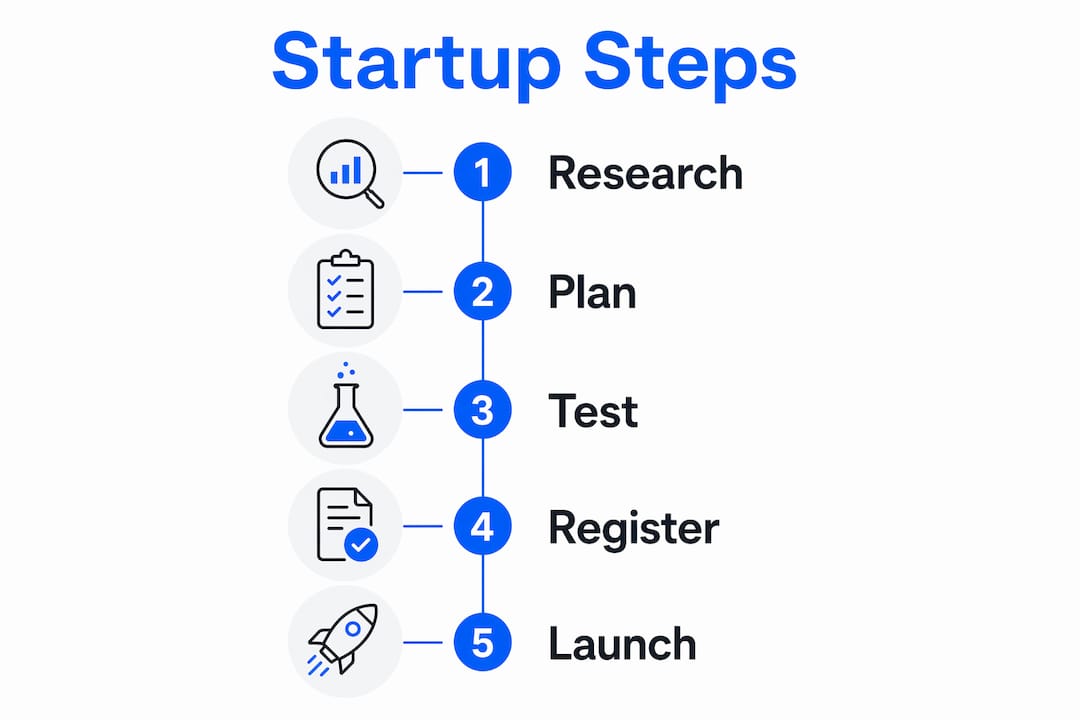
Starting a business is the process of turning a well-researched idea into a legally compliant, funded, and operational enterprise. It covers five core stages: planning, funding, registration, marketing, and day-to-day management. Get any one of these wrong and the rest becomes harder. This guide walks you through each stage with practical, Australian-focused advice so you can move from idea to open-for-business with confidence and clarity.
A well-written business plan serves two purposes: it acts as your internal roadmap and gives lenders or investors the evidence they need to back you. Without one, you are making decisions based on gut feeling rather than data. That is a costly way to learn.
Your business plan does not need to be a 40-page document on day one. Start with the fundamentals and build from there.
What your business plan must include:
Treat your business plan as a living document that evolves as market conditions shift and funding feedback comes in. A plan written in january may look very different by july once you have spoken to real customers.
One mistake many first-time founders make is registering a company before they have tested their idea. Premature incorporation creates tax obligations and administrative burdens before you have earned a single dollar.
Pro Tip: Test your concept with a minimum viable product or prototype before you formally register. Validating market need early saves money and prevents unnecessary compliance headaches down the track.

Funding is where many good ideas stall. No federal grants are currently available specifically for starting a business, which means you need to build your capital from other sources. That reality is not a barrier. It is a planning prompt.
The three most common funding paths are personal savings, small business loans, and private investors. Each carries different trade-offs.
Funding options compared:
Before you approach any funding source, run a break-even analysis. This calculation tells you exactly how much revenue you need to cover your costs. Cash flow failure is the leading cause of startup collapse in the first year. Knowing your break-even point early gives you a target to aim for and a warning signal if you are falling short.
Pro Tip: Open a dedicated business bank account from day one. Mixing personal and business finances creates accounting headaches and can complicate your tax return significantly.
Tracking expenses from the start also matters. Use a simple spreadsheet or accounting software to record every cost. Small expenses add up fast, and knowing where your money goes helps you cut waste before it becomes a problem. Understanding why small businesses struggle often comes down to poor cash flow visibility in the early months.
Legal registration is not optional. Operating without the right structure and licences exposes you to fines, personal liability, and reputational damage. The good news is that the process is straightforward when you follow the right order.
Your legal structure affects your tax obligations, personal liability, and ability to raise funds. The four main options in Australia are:
Registration involves federal, state, and local requirements that must be coordinated carefully. Skipping steps or completing them out of sequence causes delays and penalties.
| Registration step | Where to apply | Why it matters |
|---|---|---|
| Australian Business Number (ABN) | Australian Business Register | Required to invoice, claim GST credits, and operate legally |
| Business name registration | ASIC | Required if trading under a name other than your own |
| GST registration | Australian Taxation Office | Mandatory if annual turnover exceeds $75,000 |
| State and local licences | Relevant state authority | Varies by industry and location |
| Business insurance | Private insurer | Protects against liability, property damage, and income loss |
Businesses with employees face additional obligations. You must register for Pay As You Go (PAYG) withholding, set up superannuation contributions, and comply with Fair Work Australia requirements. In the United States context, the equivalent step involves securing an Employer Identification Number and filing employment forms with the IRS. In Australia, your Australian Taxation Office registration covers similar ground.
Pro Tip: Register your ABN and business name before you print any marketing materials, build a website, or open a bank account. Getting the order right saves you from rebranding costs later.
Business insurance is often overlooked by new founders. Public liability insurance, professional indemnity cover, and product liability insurance each protect different aspects of your operation. Speak to a licensed insurance broker to identify what your specific business needs.
The first 90 days after launch set the tone for everything that follows. Successful entrepreneurs focus this period on customer acquisition and cash flow management rather than perfecting their brand or building out infrastructure. Revenue pays the bills. A perfect logo does not.
This does not mean branding is unimportant. It means the sequence matters. Get paying customers first, then refine your brand as you learn what resonates. Understanding how to build a brand from scratch becomes far more effective once you have real customer feedback to guide your decisions.
Early-stage priorities for new business owners:
Early marketing strategy for service businesses is not about spending big. It is about showing up consistently in the right places and making it easy for the right people to find and trust you. A well-planned marketing campaign, even a simple one, outperforms random posting every time. Learning how to build effective marketing campaigns from the start gives your business a repeatable system for growth rather than a cycle of feast and famine.
Hiring your first team member is a significant step. Bring people on when the workload genuinely exceeds your capacity, not before. Premature hiring drains cash and creates management complexity before you have the systems to support it.
Starting a business is one thing. Building one that grows consistently is another challenge entirely.

Mybworkshops offers expert-led workshops designed specifically for service-based business owners who want to move beyond guesswork and build a real marketing system. The structured programme covers business planning, brand building, and customer acquisition through a blend of personal mentorship and practical tools. Real clients have seen increased conversions and reduced wasted ad spend. Whether you are pre-launch or already trading, the Mybworkshops programme gives you a clear framework to attract leads, convert them into clients, and grow with confidence. You can also start with the free masterclass to get a feel for the approach before committing.
Starting a business requires a validated idea, a living business plan, coordinated legal registration, and a relentless focus on paying customers in the first 90 days.
| Point | Details |
|---|---|
| Business plan is non-negotiable | It guides your decisions internally and satisfies lenders and investors externally. |
| Validate before you register | Test your idea with a prototype or MVP to avoid premature tax and admin obligations. |
| Know your break-even point | Calculate the revenue needed to cover costs before you spend a dollar on marketing. |
| Register in the right order | Secure your ABN, business name, and GST registration before trading or marketing. |
| First 90 days: customers first | Prioritise paying customers and cash flow over brand perfection or infrastructure setup. |
The first step is validating your business idea through market research and competitive analysis. Confirm there is genuine demand before investing time or money in registration or product development.
A business plan is not legally required, but it is practically essential. Lenders and investors require one, and it helps you make informed decisions as your business grows and market conditions change.
Funding options include personal savings, small business loans, and private investors such as angel investors. No government grants are currently available specifically for starting a business, so early financial planning is critical.
Most businesses need an ABN, a registered business name through ASIC, and GST registration if annual turnover exceeds $75,000. Additional state licences and permits apply depending on your industry and location.
Registering an ABN and business name can take as little as one to two business days online. Setting up the full legal, financial, and operational structure typically takes two to four weeks when registrations are coordinated correctly.